The diaper bag is already full, sleep is happening in short shifts, and the idea of getting everyone out the door may feel like a small miracle. That is exactly why newborn session preparation should be gentle, simple, and built around your family rather than a rigid checklist. Your baby does not need to perform. You do not need a picture-perfect morning. You simply need a little support so you can settle in, breathe, and let this tender chapter be remembered.
A newborn portrait session is not about preserving a perfectly styled version of early parenthood. It is about holding onto the details that are already changing: tiny fingers wrapped around yours, the curve of a sleepy cheek, the way an older sibling looks at the newest member of the family. With a bit of planning, the experience can feel less like an appointment and more like protected time together.
Newborn Session Preparation Starts With Expectations
The most helpful thing you can bring to your session is permission to slow down. Newborns need breaks to eat, be changed, and be comforted. Older siblings may need a snack, a cuddle, or a moment to warm up. All of this is normal, and it is part of photographing real family life with care.
Plan for the session to move at your baby’s pace. Some babies sleep deeply, while others are alert and curious. Both can create beautiful images. A calm, awake newborn looking toward a parent can be every bit as meaningful as a curled-up sleeping portrait. Let go of the idea that there is one right way for your baby to show up.
If you are worried about your own energy level, keep the rest of the day light. Avoid scheduling errands, visitors, or a long family outing before your appointment if you can. Give yourselves room to be unhurried. The photographs will benefit, but more importantly, so will you.
Feed, Comfort, and Follow Your Baby’s Rhythm
A comfortably fed baby is often more settled, so many families find it helpful to offer a full feeding shortly before the session begins or once they arrive. There is no need to force a new schedule just for photos. Follow the routine that is working for your baby, whether that means nursing, bottle-feeding, or a combination of both.
Build in extra time for feeding and burping. A session with a newborn is designed to accommodate these pauses, not rush past them. If your baby needs a reset midway through, that is completely expected. The quiet moments in between can often become some of the most connected images of the day.
Bring the comfort items your family relies on. For some babies, that may be a pacifier, favorite swaddle, extra burp cloths, or a familiar blanket. If you have a sentimental quilt, heirloom outfit, or a small item with family meaning, mention it ahead of time. Meaningful pieces can be included thoughtfully without distracting from the connection at the heart of your portraits.
What to Bring to Your Newborn Portrait Session
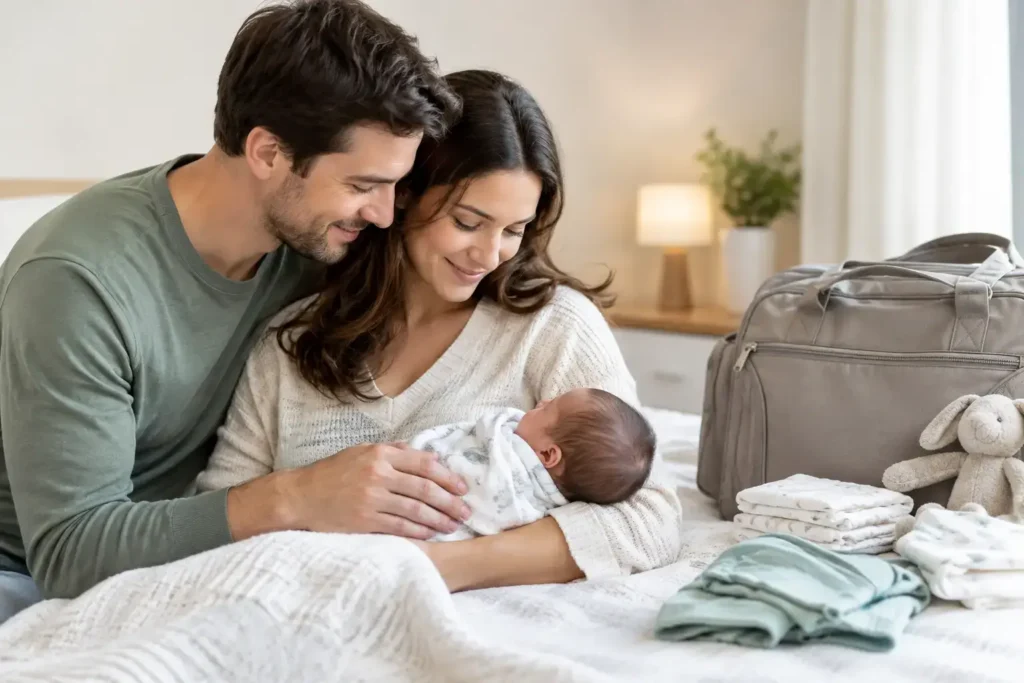
You do not need to pack for every possible scenario, but a few practical extras can help everyone feel prepared. Keep your bag simple and include enough diapers and wipes for the outing, a change of clothes for baby, feeding supplies, and a spare top for each parent if possible. Newborns have excellent timing when it comes to surprise spit-up and diaper changes.
For siblings, bring a quiet snack that will not create sticky hands or brightly colored stains. A small comfort item can also help a young child feel secure while they wait for their turn. It is best to save high-energy treats and toys for after the session, when you are all finished.
If your session is at a studio, ask what wraps, blankets, props, and accessories are already available. In many cases, less is more. A carefully chosen collection of soft textures and neutral details keeps the focus where it belongs: on your baby’s features and the people who love them most.
A note about safety
Newborn safety always comes before a pose, prop, or image idea. Your photographer should guide positioning carefully, support baby at all times, and never force a baby into an uncomfortable position. If your little one does not settle into a particular setup, there are many beautiful alternatives. The goal is a peaceful experience and authentic portraits, not recreating a trend at any cost.
Choose Clothing That Feels Like You
The most timeless wardrobe choices tend to be soft, comfortable, and connected in color without being overly matched. Cream, warm white, muted blue, sage, soft blush, oatmeal, and gentle earth tones photograph beautifully and keep the attention on your family. Textured fabrics such as linen, cotton, knitwear, and flowing dresses add visual warmth without feeling busy.
For parents, choose clothing that makes you feel comfortable enough to sit, stand, hold your baby close, and move naturally. A soft dress, relaxed blouse, simple button-down, or neutral sweater can work beautifully. If you are newly postpartum, prioritize pieces that feel good on your body right now. You do not need to wait until you feel like a former version of yourself to be in photographs with your baby. This version of you is part of your family’s story.
For baby, simple is often best. A neutral onesie, soft knit outfit, or diaper cover may be all you need. Avoid clothing with large logos, busy graphics, or stiff layers that can bunch around baby’s face. If you have a special outfit, bring it along, but keep a simpler backup option nearby in case it feels uncomfortable or does not fit as expected.
Help Older Siblings Feel Included
For an older sibling, welcoming a new baby is a big transition. A photo session can feel unfamiliar too, especially when so much attention seems to be on the newest family member. Before the session, explain in simple language that they will have an important job: loving on their baby, sitting close with Mom or Dad, and helping tell the story of your family.
Try not to place the pressure of a perfect smile on them. Some of the most heartfelt sibling photographs happen when children are allowed to be themselves: gently touching tiny toes, peeking at the baby, leaning into a parent, or giggling between moments. Your photographer can guide them with prompts and play rather than expecting long periods of stillness.
It can help to arrange for one parent or caregiver to be available for breaks. This allows an older child to step away when needed without interrupting the entire session. It also gives each parent a chance to be fully present in a few portraits instead of managing every detail at once.
Give Yourself Grace Before the Camera Comes Out
Many new parents arrive worried about the small things: dry skin, baby acne, a missed nap, a healing body, or a home that does not feel ready. These concerns are understandable, especially in the emotionally full weeks after birth. But they do not erase the beauty of what is happening in your family.
A skilled portrait experience is guided with compassion. You will be shown where to place your hands, how to settle close together, and when to simply look at your baby. You do not need to know how to pose. You only need to show up as you are, with the people you love.
At Willow & Roots Studios, the goal is to help your family feel cared for from the first planning conversation through the final artwork you hold in your hands. These images are not meant to document whether everything went according to plan. They are meant to carry you back to the beginning, when your baby was impossibly small and your family’s next chapter had just begun.
When the day arrives, leave a few extra minutes, take one more breath in the car, and remember this: your baby does not need to be perfect to be beautifully remembered. They only need to be loved, and you already have that part covered.