
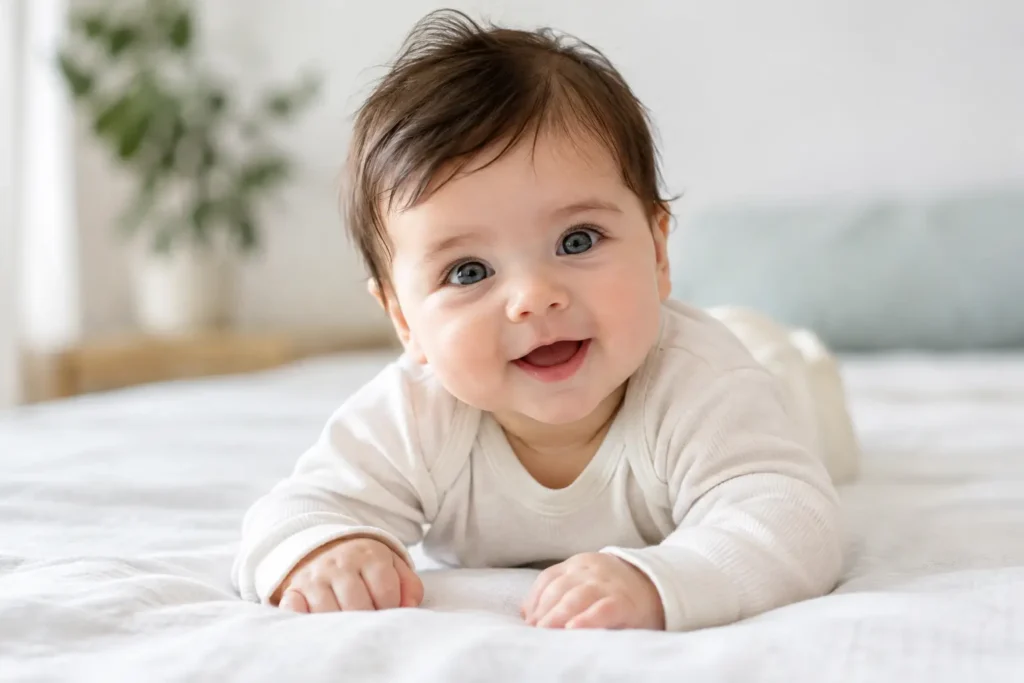
Those bright, searching newborn eyes can feel like a tiny miracle – especially when they meet yours. So, can babies be photographed awake? Absolutely. While sleepy newborn images are beloved for good reason, an awake baby brings a different kind of magic to a portrait: expression, curiosity, eye contact, and the beginning of a personality you will want to remember.
For parents, the question often comes with a little worry. What if the baby will not sleep? What if they fuss? What if the photos do not look like the peaceful, curled-up images you have seen before? The good news is that a baby does not have to sleep for a newborn session to be meaningful, beautiful, or worthy of a place on your walls.
Can Babies Be Photographed Awake During a Newborn Session?
Yes. Awake newborn portraits are not a backup plan. They are a valuable part of telling your family’s story exactly as it is in those first tender days.
A sleepy baby allows for certain gently posed images, particularly during sessions held in the first couple of weeks after birth. An alert baby, meanwhile, may offer soft gazes, wide eyes, tiny stretches, or an expression that looks remarkably like recognition. These photographs often become family favorites because they preserve a fleeting detail parents remember so vividly: the way their baby looked at them before the newborn haze passed.
The key is working with your baby’s rhythm rather than asking them to perform. Babies are wonderfully unpredictable, and a thoughtful photographer plans for that. We build in time for feeding, soothing, changing, and simply letting your little one settle. A session should have room to breathe, because your comfort matters just as much as the final images.
What Awake Baby Photos Can Look Like
Awake does not need to mean overstimulated. The goal is a calm, connected baby who is comfortable and supported, not a baby expected to stare directly into the camera for an hour.
Some of the loveliest awake portraits happen in your arms. Your baby may look toward your face, curl a hand around your finger, nestle against your chest, or study the window light. These quiet interactions make space for the relationship that is already unfolding between you.
Close-up images are especially beautiful when a baby is awake. The curve of a cheek, fluttering lashes, open eyes, a yawn, a determined little frown, and those impossibly small fingers all carry the texture of this season. A full family portrait can be just as successful, too. Often, the most meaningful photograph is not one where everyone is looking at the lens, but one where parents are looking at their baby.
If your little one is content but alert, we may also photograph them safely wrapped or resting in a simple, supported position. The approach depends on their age, comfort, and level of wakefulness. A baby who is wide awake and wiggly is better photographed in ways that allow for natural movement than in a pose that requires deep sleep.
The Difference Between Alert and Overtired
There is a sweet spot for awake newborn photography. An alert baby may have relaxed limbs, bright eyes, and moments of quiet observation. An overtired or hungry baby may turn away, tense their body, fuss continuously, or struggle to settle.
Neither response means you have done anything wrong. Newborns are still adjusting to life outside the womb, and their schedules are not predictable. It simply helps to recognize that a peaceful awake portrait and an overstimulated baby call for different choices.
When a baby begins to show signs of overwhelm, we slow down. A feed, a swaddle, gentle rocking, or a few minutes against a parent’s chest can make all the difference. Sometimes the best decision is to shift from individual baby portraits to parent-and-baby images. This is not settling for less. It is honoring what your baby needs in that moment, and those held-close photographs often carry the deepest feeling.
How to Prepare for Awake Newborn Portraits
You do not need to keep your baby awake before a session in hopes that they will sleep later. Newborn sleep cannot be scheduled with that kind of precision, and trying to change their routine can add unnecessary stress to an already full day.
Instead, focus on keeping the day gentle. If possible, offer a full feeding shortly before your session begins or when you arrive. Bring extra milk or formula if you use it, along with diapers, wipes, a pacifier if your baby takes one, and a spare outfit for everyone. Parents are often surprised by how much calmer they feel knowing they are prepared for the ordinary realities of life with a newborn.
For clothing, simple is usually best. Soft, neutral pieces and comfortable layers keep the attention on connection rather than distractions. If baby will be photographed awake, avoid outfits that feel stiff, scratchy, or overly complicated to adjust. A comfortable baby has more room to be curious and calm.
It also helps to release the expectation that every image must look a certain way. Your newborn may sleep through much of the session, spend much of it awake, or do a little of both. All three outcomes can create a gallery that feels true to your family.
Why Parent Photos Matter Even More When Baby Is Awake
Many parents tell us they only want photographs of the baby. That instinct makes sense. You are in the middle of a major transition, likely tired, emotional, and not necessarily feeling ready to be in front of a camera.
But awake baby portraits are a beautiful reminder to step in, too. Your voice may be the thing that settles them. Your face may be where their eyes naturally land. Your hands, your shoulder, and the familiar place beneath your chin are part of their earliest sense of home.
Years from now, your child will not care whether you had a perfect hair day. They will see the tenderness in the way you held them. They will see how small they were in your arms and how completely they belonged there. These are the images that turn a newborn session from a record of a baby into a chapter of a family’s legacy.
Safety Comes Before Any Pose
A professional newborn session should always put safety above a particular image. Awake babies move more suddenly than sleeping babies, so they need attentive support and age-appropriate setups at all times.
That may mean choosing wrapped poses, photographing baby in a parent’s arms, or keeping a supporting hand close by and editing it from a final image when appropriate. It also means never forcing a baby into a position they resist and never leaving them unsupported on a prop, bed, or elevated surface. The most beautiful portrait is never worth taking a risk.
At Willow & Roots Studios, guidance is part of the experience. You do not need to know how to position your hands, soothe your baby for the camera, or decide whether a sleepy or awake moment is the “right” one. Your family is the hero of this story. Our role is to help you feel cared for while preserving the honest, beautiful moments that are already happening.
When an Awake Session May Be the Better Fit
Some babies are naturally more observant, particularly as they grow beyond the earliest newborn weeks. Others may be photographed closer to a month old because of recovery, scheduling, travel, or simply because those first days moved faster than expected. In these cases, expecting a fully sleepy, heavily posed session may not be realistic – and that is perfectly okay.
Older newborns often have longer alert windows and more expressive eyes. Their sessions can lean into connection, swaddled portraits, gentle movement, and family interaction. Rather than comparing the experience to images made with a seven-day-old baby, it helps to embrace what is special about your baby’s current stage.
The same is true for babies with reflux, colic, feeding challenges, or a strong preference for being held. A photographer who listens and adapts can create meaningful images without making the session feel like a test your family has to pass.
Your baby does not need to sleep on cue to be photographed beautifully. Bring them as they are – alert, sleepy, squirmy, hungry, soothed by your voice, and deeply loved. The expressions may be brief, but the memory of who they were in your arms at the very beginning deserves to last.