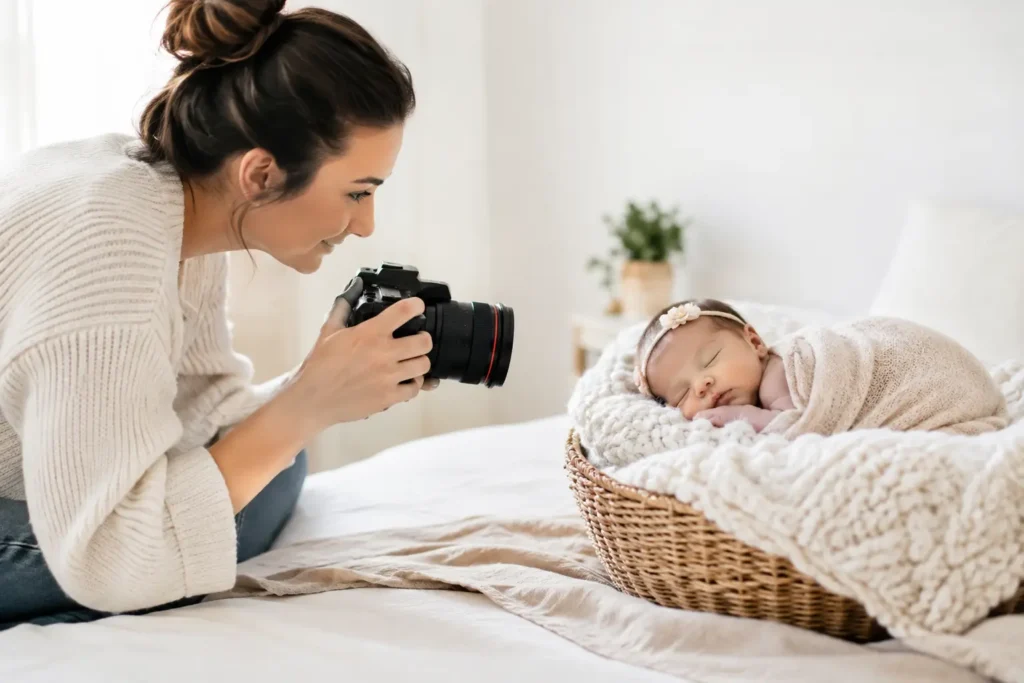
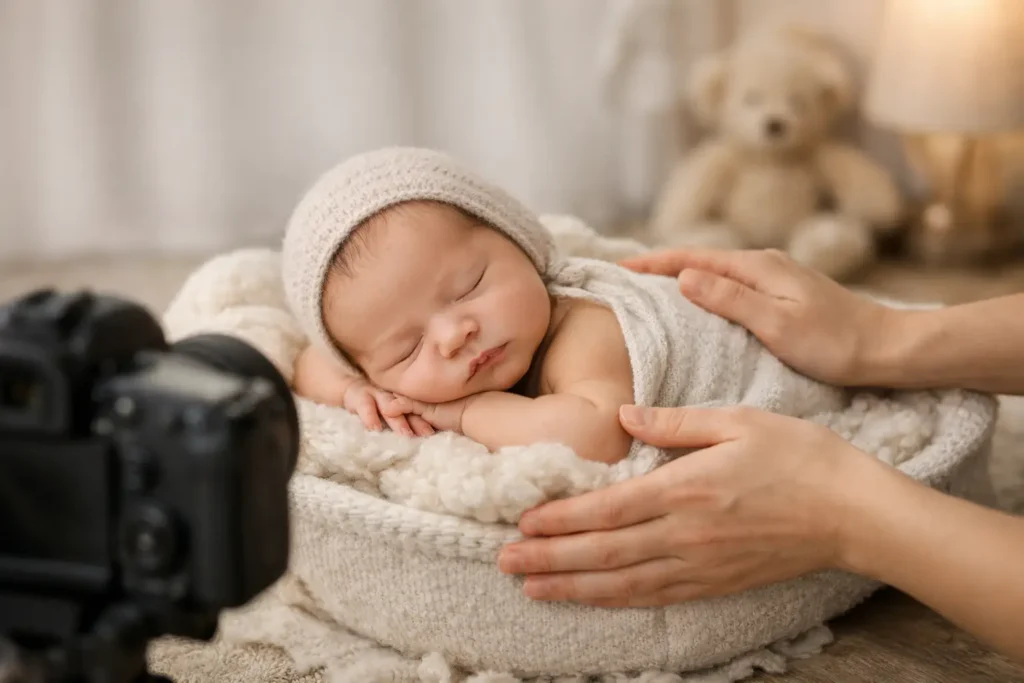
Those sleepy, curled-up newborn portraits may look effortless, but the calm you see in the finished image begins with thoughtful preparation and patient care. A newborn photography safety guide is not about making parents anxious before their session. It is about helping you understand what a professional, baby-led experience should feel like: warm, unhurried, closely supervised, and centered on your little one’s well-being.
Your baby’s first days are tender and quickly changing. The goal is never to ask more of them than they are ready to give. The goal is to preserve the tiny details you already love – the wispy hair, curled fingers, soft cheeks, and the way they fit so perfectly in your arms – while protecting their comfort at every step.
Newborn Photography Safety Guide: What Comes First
Safety comes before a pose, a prop, a schedule, or a particular image from a Pinterest board. Newborns have limited head and neck control, are still regulating their body temperature, and can become overstimulated quickly. A skilled photographer watches the baby constantly and adjusts the session around their cues.
That means a session may include pauses for feeding, rocking, diaper changes, or simply a moment to settle. These breaks are not interruptions. They are part of the process. Some babies sleep deeply and happily through several setups; others prefer to be held, swaddled, or photographed awake. Both tell a beautiful and honest story of this chapter.
For most families, newborn sessions are best scheduled within the first two to three weeks after birth, when babies are often sleepier and naturally curl into comfortable positions. Still, there is no hard deadline on meaningful portraits. If your baby arrived early, needed extra care, or your family simply needs more time to recover, the right timing is the timing that supports your family.
A Clean, Calm Studio Environment
Newborn safety starts long before a family walks through the door. Fabrics, wraps, blankets, and surfaces that touch a baby should be freshly laundered and prepared for each session. Hands should be washed often, particularly after adjusting props, handling personal items, or taking a break.
A warm room can help a lightly dressed or wrapped baby stay comfortable, but warmth should always be monitored. Babies should not be overheated for the sake of a photograph. Your photographer should pay attention to signs such as flushed skin, sweating, fussiness, or rapid breathing, and should add or remove layers as needed.
The studio should also be a low-pressure space. Soft sound, gentle movement, and a patient pace can help settle a newborn, but no setting can guarantee sleep. A photographer’s confidence should never become pressure for a baby to perform. The best sessions make room for real life: a yawn, a stretch, a tiny cry, and a quiet snuggle with Mom or Dad.
When Illness Means Rescheduling
Because newborn immune systems are still developing, anyone who is unwell should stay home. This includes the photographer, parents, siblings, and visiting family members. Colds, flu symptoms, fever, stomach illness, cold sores, or recent exposure to a contagious illness are all valid reasons to postpone.
Rescheduling can feel disappointing when you have been looking forward to this milestone. Yet protecting your baby matters more than a calendar date. A caring studio will handle that change with understanding and help create a new plan.
Safe Posing Is Always Supported Posing
Many of the newborn images parents admire online involve more support than the final photograph reveals. A baby’s head, wrists, hips, and airway must be protected at all times. Poses should be gentle, natural, and never forced. If a baby resists a position, appears uncomfortable, or cannot safely hold it, the pose is simply not right for that baby.
Some advanced-looking images are created as composite photographs. This means an adult’s hands remain on or immediately beside the baby throughout the setup, and multiple images are carefully combined afterward to remove the supporting hands. A newborn should never be left unattended on a prop, posed upright without support, or balanced in a basket, bucket, or other container.
Props require special care, too. They should be sturdy, weighted when appropriate, placed on stable ground, and padded with soft materials. Tall or unstable props may create a dramatic look, but the trade-off is never worth the risk. Often, the most timeless images are the simplest: baby on a soft blanket, wrapped securely, or safely held by the people who love them most.
Parent and Family Poses Matter, Too
Your arms are one of the safest and most meaningful places for your newborn to be photographed. Parent images do not require everyone to look perfectly polished or your baby to sleep. A close hold against your chest, a gentle kiss on the forehead, or a sibling sitting securely beside a supported baby can become the portraits your family treasures most.
For sibling photographs, an adult should always be close enough to assist immediately. Young children are loving and curious, but they cannot be expected to understand newborn safety in the moment. Sometimes a sibling standing near a parent who is holding the baby creates a more relaxed image than asking them to sit in a complicated pose.
Feeding, Soothing, and Following Your Baby’s Rhythm
A comfortably fed baby is often more settled, so many parents choose to offer a feeding shortly before the session or once they arrive. But newborns feed frequently, and there is no need to rush or apologize for stopping during photographs. Feeding breaks are expected.
Bring extra diapers, wipes, bottles if you use them, a pacifier if your baby takes one, and a spare outfit for everyone. A small bag of familiar comforts gives you options without turning preparation into a major production. If you are nursing, wear something that makes feeding easy. If you are recovering from birth, choose clothing that feels soft and forgiving. Your comfort matters, too.
It is also helpful to keep expectations flexible. A baby may have a growth spurt, a fussy afternoon, or a day when they want to be close to you. These are not signs that the session has gone wrong. With patient guidance, even the unscripted moments can become the images that feel most like your family.
Questions to Ask Before You Book
Trust is essential when choosing someone to photograph your newborn. You deserve clear answers about how a photographer approaches cleanliness, posing, prop safety, and illness policies. Ask whether the photographer is trained in newborn safety, how they support babies in posed images, and whether a parent can stay nearby throughout the session. The answer should feel calm, specific, and reassuring – not dismissive.
You can also ask what happens if your baby needs extra time, will not settle, or arrives after the typical newborn window. A family-centered photographer understands that babies do not follow a production schedule. The experience should make you feel guided, not rushed.
At Willow & Roots Studios, we believe your family is always the heart of the story. That means creating portraits with a gentle pace, careful attention, and space for the real moments you will want to remember years from now.
Trust Your Instincts During the Session
You know your baby better than anyone in the room. If something makes you uneasy, speak up. You never need to agree to a pose, prop, or styling choice that does not feel right. A professional photographer will welcome the conversation and offer alternatives that keep your baby comfortable and safe.
The same is true after the session. The images you choose do not need to be the most elaborate to be meaningful. A tiny hand resting against yours, the curve of your baby’s back while they sleep on your chest, or the first portrait of your new family together can hold an entire season of love.
These days may feel blurry, beautiful, and a little overwhelming. Let the photographs be one gentle pause inside them – a safe place to remember just how small they were, and how fully they were loved.