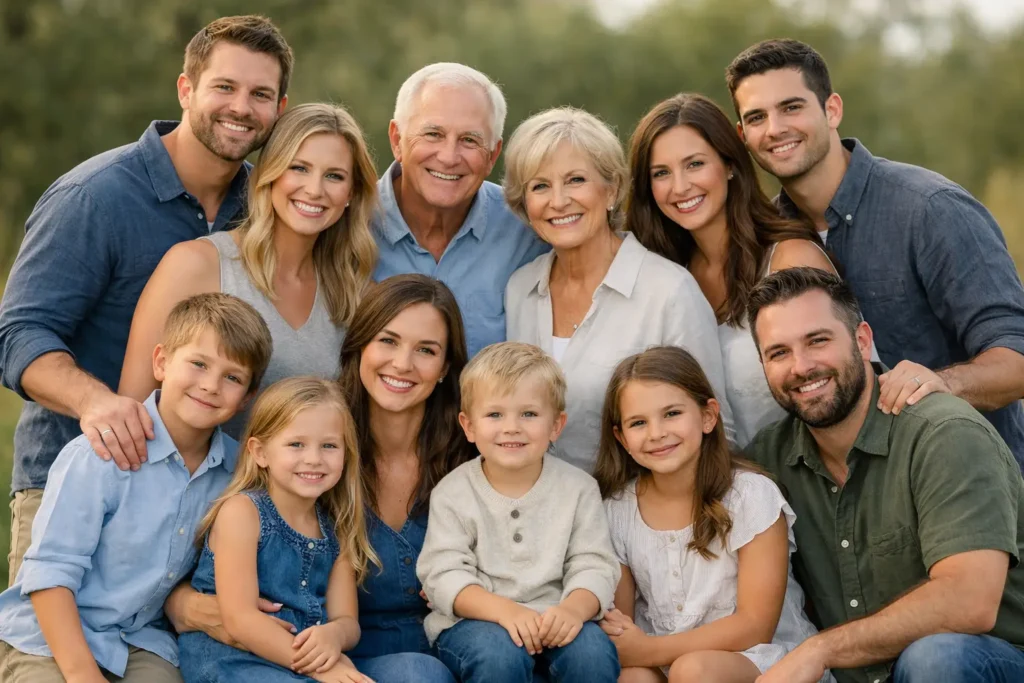
A grandparent kneeling beside a wiggly toddler, cousins finally laughing together, grown siblings leaning in like no time has passed – these are the moments that make a large family portrait worth planning. The best extended family photo tips are not about making everyone perfectly still. They are about creating enough calm, comfort, and direction for your family’s real connection to show.
An extended family session can include a lot of moving parts, especially when relatives are visiting St. Augustine for a holiday, reunion, or beach weekend. With a little preparation and a photographer who knows how to guide the group, the experience can feel joyful rather than rushed – and the final images can become part of your family’s legacy for years to come.
Extended Family Photo Tips That Make Planning Easier
Start with the reason you are gathering
Before you choose outfits or a location, think about what this portrait season means. Is it the first year with a new baby? A long-awaited reunion? A celebration of grandparents, an anniversary, or simply the rare occasion when everyone is in one place?
Sharing that story with your photographer shapes the session. It helps determine which relationships deserve extra attention, whether you need a formal full-group portrait, and which smaller combinations matter most. A photograph of grandparents surrounded by every grandchild may mean more to your family than another perfectly posed image of the entire group.
Choose a time that works for the youngest family members
Young children set the pace, and that is not a problem. It is useful information. Schedule around naps, meals, and the time of day when your little ones are generally most cheerful. For many Florida families, a morning session works well for babies and toddlers, while an evening session offers softer light and cooler temperatures.
There is a trade-off. Golden-hour light is beautiful, but a tired two-year-old will not care about the sky. If your group includes very young children, choose the time that protects their comfort first. Genuine smiles always matter more than a strict photography ideal.
Pick a location with room to breathe
A large group needs more space than you think. Open beach areas, a shady park, a garden setting, or a meaningful family property can all work beautifully when there is enough room to arrange people without making anyone feel crowded.
In St. Augustine, the backdrop should support the people in the photograph rather than compete with them. Consider access for grandparents, parking, walking distance, shade, and restroom availability. A historic setting may be meaningful, but it may not be the right fit if someone has limited mobility or the group includes several small children who need room to move.
Coordinate colors instead of matching every outfit
The old approach of putting everyone in identical shirts can make a family portrait feel stiff. Choose a shared color palette instead: soft neutrals, coastal blues, warm earth tones, or gentle pastels. Then let each person wear something that feels like them within that palette.
Aim for a balance of solids, subtle texture, and a few quiet patterns. Avoid having every person wear the same shade, or placing several bold patterns next to one another. If one person is wearing a floral dress, pull two or three colors from that print into the rest of the family’s outfits.
For outdoor Florida portraits, breathable fabrics are a thoughtful choice. Linen, cotton, lightweight dresses, and layers that can be removed keep everyone more comfortable in humid weather. Comfort shows in photos just as clearly as color does.
Give one person the job of communication
A group chat is helpful, but it can also create twenty different opinions about where to stand and what to wear. Choose one organizer to share the final session details: arrival time, location, parking instructions, wardrobe palette, and a reminder to eat beforehand.
This person does not need to manage every detail alone. Their role is simply to give the group one reliable source of information. A clear plan reduces the last-minute questions that can make the beginning of a session feel hurried.
How to Photograph the Connections Within a Big Family
Make a short list of must-have groupings
The full extended family portrait is only the beginning. Think about the images you will want when you look back five, ten, or twenty years from now: grandparents with grandchildren, each individual household, adult siblings, cousins, and perhaps a quiet portrait of the couple or family members who made the gathering possible.
Keep the list focused. Too many combinations can drain energy from the session, especially for children. Prioritize the relationships that cannot easily be photographed again, then leave room for natural moments to unfold.
Photograph the full group early
The largest grouping should usually happen near the beginning, while everyone is present, dressed, and reasonably patient. Once that portrait is complete, smaller groups can rotate in and out, and children can have brief breaks.
This approach also protects the image that is hardest to recreate. If a toddler needs a snack later or a relative must leave early, the family’s essential portrait is already safely captured.
Let children be children
A child does not need to stare into the lens for every image. Some of the most meaningful photographs happen when a little one reaches for Grandma’s hand, studies a seashell, or dissolves into laughter while being held by a parent.
Rather than asking children to perform for long stretches, give them simple, playful direction. Ask them to snuggle close, tell a secret, look at the person who makes them laugh, or show off their favorite silly face. These prompts create connection without demanding perfection.
Prepare grandparents for comfort, not performance
Grandparents often care deeply about the images but worry about standing too long, walking on uneven ground, or being the center of attention. A chair, a shaded pause, a shorter walking route, and a clear explanation of what will happen can make a meaningful difference.
Seated portraits can be especially lovely. They naturally bring children and grandchildren close, creating a layered, connected composition without asking anyone to remain on their feet. If mobility is a concern, mention it during planning so the session can be designed with care.
Trust gentle direction with posing
Large groups rarely look their best when everyone is left to figure out where to put their hands. Good direction is not about forcing your family into unfamiliar poses. It is about making small adjustments that help everyone look comfortable, connected, and well placed.
A photographer may ask taller relatives to anchor the back, invite parents to turn slightly toward their children, or place grandparents at the center of the group. These choices create visual balance while keeping the feeling relaxed. Once the main portrait is in place, the best expressions often appear in the small in-between moments.
Protect the Experience, Not Just the Schedule
Build in a little extra time
Extended families move slowly for understandable reasons. Someone needs to park, a child needs a shoe tied, and relatives who have not seen each other in months will want a moment to hug. Plan for that reality rather than treating it as a disruption.
Arriving ten to fifteen minutes early gives everyone a chance to settle in. It also allows the photographer to begin on a calm note, which is especially helpful if your group includes multiple households meeting at the location.
Put phones away when it is time to connect
A few behind-the-scenes phone photos are wonderful. A row of adults holding phones behind the photographer is less helpful, particularly for children who do not know which camera to watch.
Choose one person to capture a candid or two, then let the rest of the family be present. When people are focused on one another instead of documenting every second, the portrait experience becomes part of the memory itself.
Expect real life, and welcome it
Wind may lift someone’s hair. A child may cry briefly. Your carefully chosen color palette may gain a little sand at the beach. None of these things erase the beauty of the day. Often, they are what make the photographs feel honest and specific to your family.
The goal is not a picture of a family that never gets messy or loud. It is a record of the people who belong to one another in this season of life. At Willow & Roots Studios, that is the heart behind every guided portrait experience: helping your family feel cared for while preserving the connection that cannot be repeated.
Years from now, your family may not remember who needed an extra reminder to arrive on time. They will remember the arms around one another, the laughter between cousins, and the faces that made the gathering feel like home.