
A family session rarely begins with everyone smiling at the same time. It begins with someone hunting for a missing shoe, a toddler deciding they suddenly dislike the outfit they wore happily yesterday, and a parent wondering whether the whole thing will feel worth the effort. This family photography session guide is here to take that pressure off. The photographs you treasure most will not depend on perfectly behaved children or a picture-perfect day. They will come from the connection that already exists in your family.
Your family is the hero of these images. A thoughtful plan simply gives you room to show up, settle in, and be present with the people you love.
Start With the Feeling You Want to Remember
Before choosing outfits or checking the weather, think about what you want these portraits to hold. Perhaps this is the year your baby became a busy toddler, your oldest child started school, or your family finally feels settled in a new chapter. Maybe there is no milestone on the calendar at all, only the quiet realization that this season is moving faster than you expected.
That feeling should guide the session. A golden-hour beach session in St. Augustine can feel lighthearted and open, with room for children to run and parents to breathe. A session among shaded trees or in a favorite local setting can feel softer and more intimate. At home may be the right choice when the story is less about a backdrop and more about the place where your everyday life unfolds.
There is no single setting that works for every family. Young children often do best somewhere they can move, while a newborn session may call for a slower, quieter pace. The right location is the one that supports your family rather than asking your family to perform for it.
Plan a Family Photography Session Around Real Life
The most relaxed sessions are planned with your children, not against them. If your little one is happiest after a nap and a snack, protect that window as much as possible. If evenings are usually a tough stretch, an early morning session may be a better fit, even if sunset photographs look beautiful on social media.
For many families, the ideal session time is close to bedtime or dinner. Soft light is lovely, but the trade-off is real. A photographer can guide the energy and work quickly, yet a child who is hungry or overtired has needs that cannot be edited away. Share your family’s rhythms during planning so your session can be built around what is genuinely workable.
Try to leave breathing room before you arrive. Rushing from errands, sports practice, or work straight into portraits can make everyone feel tense. Aim to have clothing ready the day before, give children a simple meal or snack beforehand, and allow extra time for the inevitable last-minute surprises.
Talk to Children Without Making It a Big Deal
Children do not need a long speech about how important photos are. In fact, that can make the experience feel like a test. Tell them you are going somewhere to play, cuddle, and take a few pictures together. Let them know the photographer will help and that nobody expects them to stand still for an hour.
Older children and teens often respond well when they have a little ownership. Invite them to choose between two shirt options or bring a small item that reflects who they are right now. Their personality belongs in the story, too.
Choose Outfits That Feel Like Your Family
You do not need matching outfits to look connected in photographs. Coordinating colors, textures, and formality creates a more natural result while letting each person still look like themselves. Begin with one outfit you genuinely love, then build around it using a small, complementary palette.
Soft neutrals, warm earth tones, gentle blues, faded greens, and muted floral patterns often photograph beautifully in Florida’s natural light. A little pattern adds interest, but several competing prints can pull attention away from faces. Consider mixing solids with one subtle print and adding texture through linen, knitwear, denim, or a flowing dress.
Comfort matters just as much as color. If a child is tugging at a stiff collar or refusing unfamiliar shoes, the outfit can become the center of the session. Choose clothes that allow movement and feel familiar. Bare feet on the beach, a favorite pair of boots, or a soft dress that twirls can bring more personality to an image than anything overly formal.
Keep the final details simple. Lay everything out together, including shoes and accessories, and remove stickers, hair ties, and anything likely to distract. If you are unsure whether pieces work together, ask for guidance before session day. A little planning can prevent a lot of second-guessing.
What to Bring, and What to Leave Behind
A few practical items can make the experience easier, especially with young children. Pack lightly so you can stay close and connected rather than managing bags throughout the session.
- Water and a mess-free snack for after the first few minutes
- A favorite comfort item, if it helps your child settle
- Baby wipes for sandy hands, sticky faces, or Florida humidity
- A backup outfit for little ones who are likely to need one
- A small blanket for sitting poses or a calm reset between moments
Try to avoid bringing rewards that must be negotiated through every photograph. Bribes can sometimes create more pressure, especially when a child is already unsure. A snack or treat afterward is often easier than asking them to earn it moment by moment.
Let Go of the Idea of Perfect Behavior
The biggest worry many parents bring to a family session is that their children will not cooperate. But children are not supposed to be polished versions of themselves in family photographs. They are supposed to be themselves: curious, energetic, shy, affectionate, serious, silly, or all of it within ten minutes.
A guided session includes prompts that create interaction rather than asking everyone to hold a smile. You may be invited to walk together, pull your child in close, tell a joke, look at each other, or simply take a breath. Those small exchanges often create the images that feel most true years later.
If your child needs a break, take one. If they want to be held, hold them. If they run ahead, there may be a beautiful photograph in that movement. The goal is not to force a single version of a happy family. It is to preserve the warmth, humor, and belonging that make your family yours.
Parents set the emotional temperature. When you can release the need for a flawless outcome, your children usually follow your lead. Look at them more than the camera. Laugh when something goes sideways. Trust that a little chaos is not a failure of the session. It is often part of the memory.
Your Family Photography Session Guide for the Camera-Shy
Feeling awkward in photographs is incredibly common, particularly for the parent who is usually behind the camera. You do not need to know how to pose, where to put your hands, or how to make every expression look effortless. That is the guidance your photographer provides.
Wear something that makes you feel comfortable and like yourself, rather than something chosen only because it seems photogenic. Arrive knowing that you can ask questions, take a moment to reset, and rely on direction. Small adjustments in posture, placement, and light make a meaningful difference, but the warmth in an image comes from your attention being on your family.
If you have concerns about scars, postpartum changes, a shy child, or family dynamics, mention them ahead of time. A caring photographer can plan with greater sensitivity when they understand what is on your heart. You deserve portraits where you feel seen with kindness.
Think Beyond the Digital Gallery
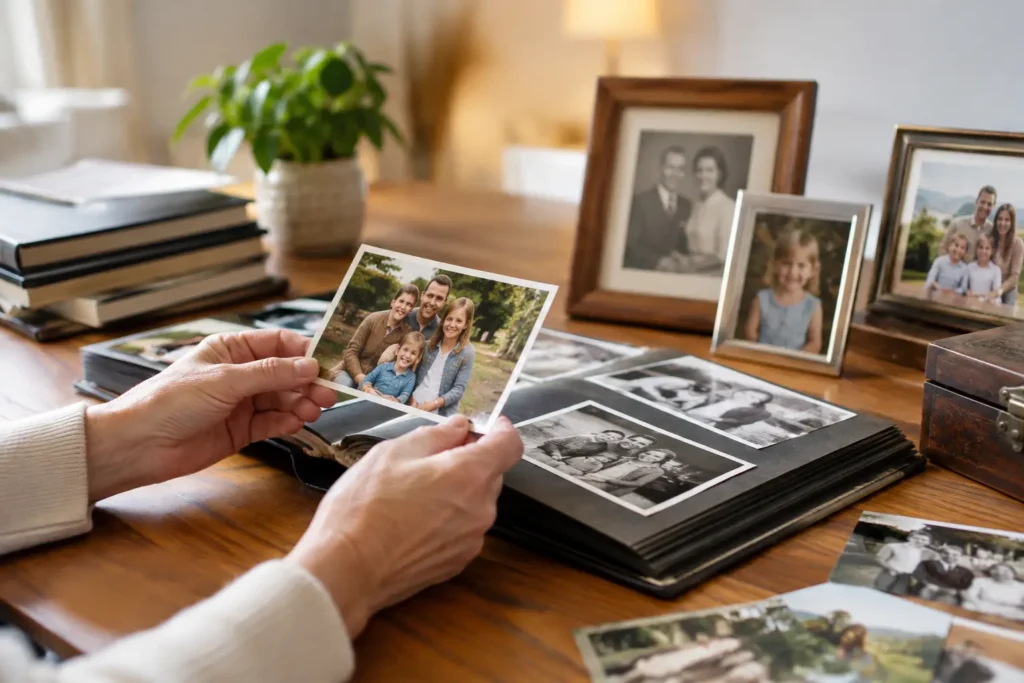
A gallery is a beautiful beginning, but photographs become part of your family’s legacy when they have a place in your life. Consider where you want to see these memories before the session even happens. A framed family portrait in the entryway can welcome you home. A collection of smaller prints can grow alongside your children. An album can become something little hands reach for now and something grown children carry later.
This does not mean every image needs to become wall art. Some photographs are private treasures, meant for a bedside frame or the pages of an album. But giving your favorites a tangible home helps keep this chapter from disappearing into a camera roll.
When session day arrives, remember that you do not have to create the magic alone. Come as you are, keep your people close, and let the imperfect little moments have their place. Years from now, you may not remember the missing shoe, but you will remember the hand that reached for yours.