The tiniest stretch of a hand, the curl of sleepy legs, the way a newborn settles against a parent’s chest – those are the details families want to remember forever. When parents search for how to newborn photo poses, they are usually asking two questions at once: how do we create beautiful images, and how do we keep baby completely safe and comfortable while doing it?
The answer starts there. A successful newborn pose is never about forcing a baby into something trendy or complicated. It is about reading your baby well, moving slowly, and choosing positions that feel natural to a brand-new body. The most meaningful newborn portraits tend to come from gentle posing, warm hands, patient timing, and an experience that feels calm from beginning to end.
How to Newborn Photo Poses Starts With Safety
Before style, before props, before any shot list, safety leads every decision. Newborns have very little head and neck control, can startle easily, and do not regulate temperature the way older babies do. That means posing should always support the head, keep airways clear, and respect what the baby will comfortably allow.
This is where social media can create unrealistic expectations. Some highly polished newborn images are composite photographs, meaning more than one image was combined in editing to create the final result safely. A pose that looks effortless in a finished gallery may actually involve a parent or spotter supporting the baby the entire time. If you are photographing your own baby at home, simple is not a compromise. Simple is often the safest and most beautiful choice.
A warm room helps. So does feeding baby just before the session, loosening diapers and clothing a little in advance to reduce marks on the skin, and allowing extra time for soothing. Newborn sessions work best when no one is rushing. Babies feel that pace.
The Best Newborn Poses Are Baby-Led
Some newborns are naturally curly and sleepy. Others prefer to be wrapped, held, or stretched out. This is why the best approach to posing is baby-led rather than pose-led. Instead of deciding in advance that you must get a specific setup, begin with what your baby is already doing comfortably and refine from there.
If baby falls asleep on their back with hands near the face, that can become a beautiful portrait. If they settle best in a swaddle, wrapped images may become the foundation of the session. If they only want to be held, parent portraits may be the strongest and most emotionally resonant images you create.
There is wisdom in working with the baby you have, not the baby you hoped would sleep through every setup.
Start With the Simplest Poses
For most newborn sessions, the easiest poses are also the most timeless. A baby on their back on a firm, padded surface with gentle support nearby gives you clean images of the face, fingers, and tiny features. Turning the head slightly to one side can add dimension while keeping the body in a natural position.
Side-lying poses are another soft option. When baby is settled on their side with knees tucked naturally, you get that sweet curled look many families love without forcing the body into an unnatural bend. The key is to keep the face visible, the chin from pressing tightly into the chest, and the baby stable at all times.
Wrapped poses are especially helpful for babies who are more alert or easily startled. A secure swaddle often helps newborns feel contained and calm, and it creates a polished portrait with very little stress on the baby. You can photograph a wrapped baby lying down, nestled in a simple prop with proper support, or held in a parent’s arms.
Parent Poses Matter More Than Many Families Expect
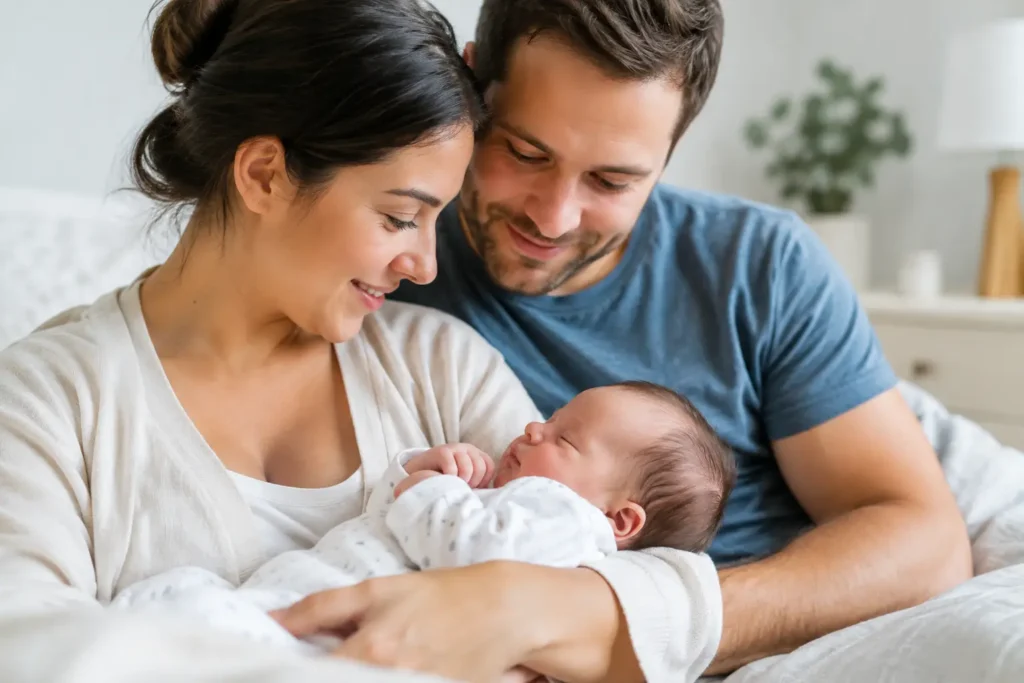
One of the most overlooked answers to how to newborn photo poses is this: include the parents. Newborn portraits are not just about documenting what baby looked like. They are about preserving the beginning of a relationship.
A baby resting against mom’s chest, tucked into dad’s hands, or held between both parents tells a fuller story than any solo pose ever could. These images also tend to feel especially natural because newborns are comforted by familiar touch, warmth, and heartbeat. When baby is unsettled on a blanket or beanbag, moving into a parent pose can change the entire tone of the session.
Keep clothing simple and neutral if you want the focus to stay on connection. Hands should look relaxed, not rigid. Bring baby in close. Support the head naturally. The best parent-newborn images do not feel posed in a stiff way. They feel held.
Reading Baby’s Cues During the Session
Even the most beautiful setup is not worth pushing through discomfort. Babies communicate clearly if you know what to watch for. Yawning, hiccups, flailing arms, finger splaying, fussing, changes in skin color, and a tense body can all signal that baby needs a break, a feed, or a different position.
That is why newborn photography requires flexibility. Sometimes a pose works immediately. Sometimes it does not work that day at all. There is no failure in adjusting. In fact, the ability to pivot is often what protects both the baby’s comfort and the final gallery.
If your baby resists being unwrapped, stay wrapped longer. If they wake as soon as they are laid down, move to arms. If they seem happiest on their side, build from there. Gentle transitions are everything. Sudden repositioning can startle a newborn and undo the calm you have worked hard to create.
Common Posing Mistakes to Avoid
The biggest mistake is chasing a pose that the baby is not physically comfortable doing. Newborn joints are delicate, and flexibility varies from baby to baby. If a hand will not rest naturally under the cheek, let it go. If the baby keeps straightening out, do not keep pressing them into a tight curl.
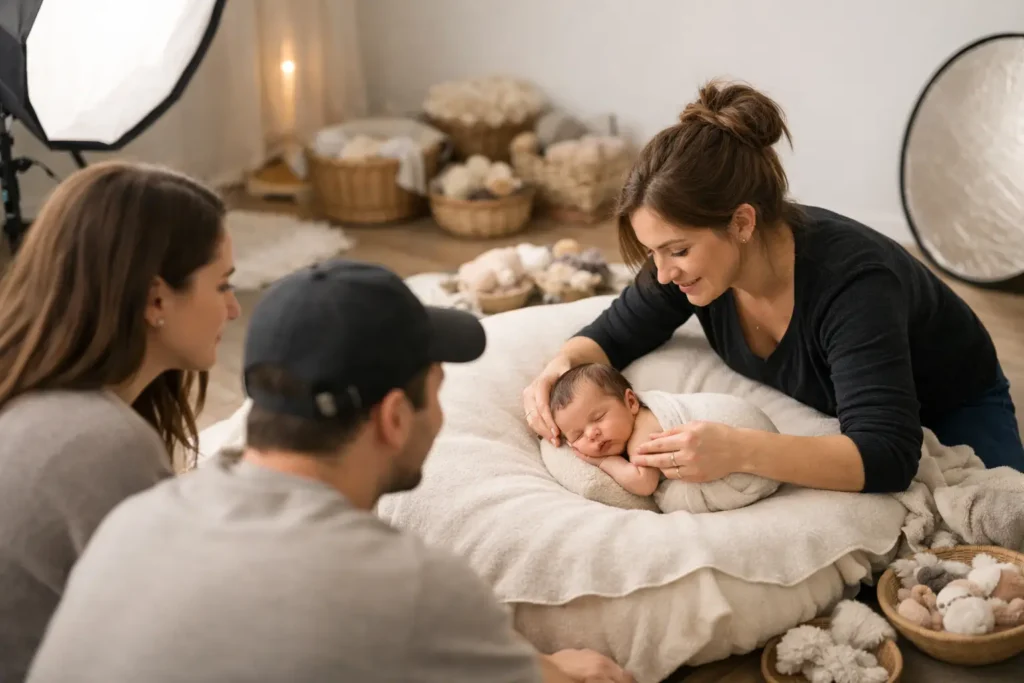
Another common issue is prioritizing props over connection. Baskets, bowls, beds, and layered blankets can be lovely, but they should never overpower the baby or create instability. A good prop setup is weighted, padded, and spotted closely. If you are ever unsure whether a prop is safe, skip it.
Lighting can also affect posing more than people realize. If a baby is placed awkwardly just to face the light, the result may look strained. It is usually better to adjust your setup than to force the baby’s body into an uncomfortable angle.
And then there is timing. Newborn sessions usually go best within the first two weeks if you are hoping for sleepier, curlier posing, but older newborns can still be photographed beautifully. The difference is often in the approach. With a three-week-old baby, you may rely less on deep-sleep poses and more on wrapped, awake, or parent-led images. Beautiful does not disappear just because the window changes. The plan simply shifts.
Creating Timeless Images Instead of Trendy Ones
When families look back on newborn portraits years from now, they rarely care whether the pose matched a current trend. They care about whether the image still feels like their baby, their story, and that fleeting season of newness.
That is why timeless newborn posing usually stays minimal. Clean blankets, soft textures, neutral tones, and natural placement of hands and feet age well. So do close-up details – lashes, lips, knuckles, wisps of hair, the way baby fits into a parent’s embrace.
At Willow & Roots Studios, that guided and heartfelt approach matters because families are not just collecting images. They are preserving the first chapter of a legacy. Posing should support that story, not distract from it.
When to Leave Newborn Posing to a Professional
There is nothing wrong with taking simple photos of your baby at home. Some of the most treasured images are the quiet, everyday ones. But if you are hoping for styled newborn portraits, especially anything involving props, advanced posing, or composite techniques, professional guidance makes a real difference.
An experienced newborn photographer understands how to support baby safely, how to keep the environment calm, and how to move through a session without creating stress for new parents. That expertise is not just about camera skill. It is about knowing when to continue, when to pause, and when the baby is telling you no.
That is often what families are really looking for when they search how to newborn photo poses. They are looking for reassurance that these memories can be documented beautifully without pressure, risk, or overwhelm.
The sweetest newborn portraits do not come from doing the most. They come from noticing the small things, honoring your baby’s needs, and letting gentleness lead the way.