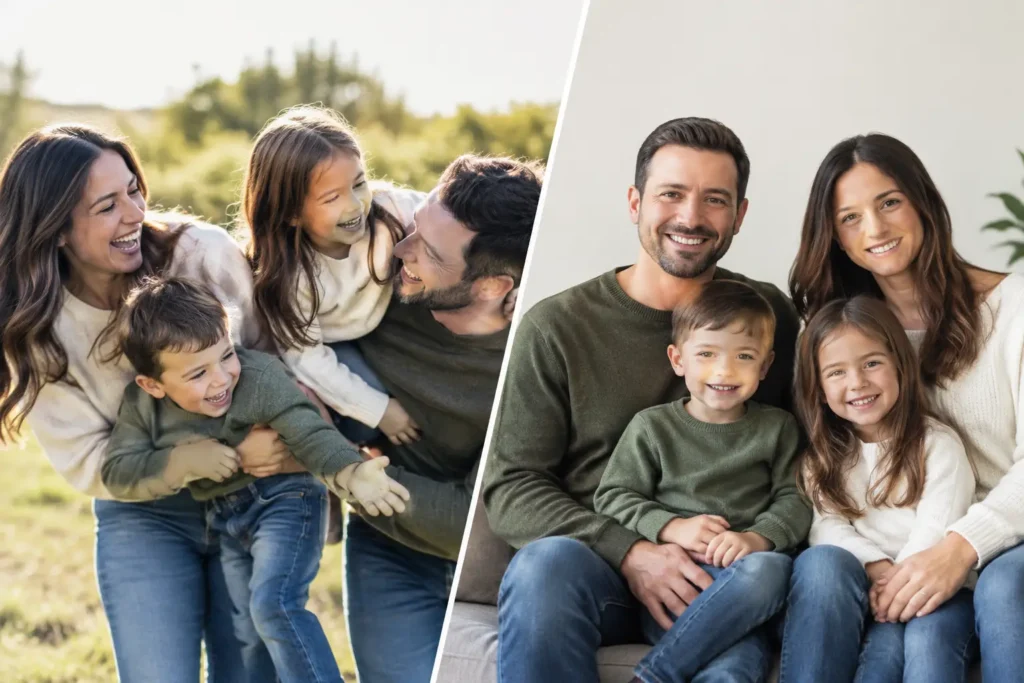
A toddler’s belly laugh after being spun in circles. Your older child slipping a hand into yours without being asked. Everyone gathered close enough to see each other’s faces clearly, knowing this photograph may someday hang in a grandparent’s home. These are all meaningful images, which is why candid versus posed family photos is not really an either-or decision for most families.
The best family portraits make room for both. A thoughtfully posed image gives your family a beautiful, lasting record of who was there. A candid image reveals the energy, affection, and small personalities that make this chapter yours. Together, they tell a fuller story than either style can tell alone.
At Willow & Roots Studios, we guide families toward a gallery that feels polished enough to display and personal enough to bring you right back to this season of life.
What Posed Family Photos Preserve
Posed family photos are the images many people picture when they imagine a family portrait: everyone together, faces visible, bodies arranged with care, and attention gently directed toward the camera. They are not stiff by definition. When posing is done well, it simply gives the photograph structure.
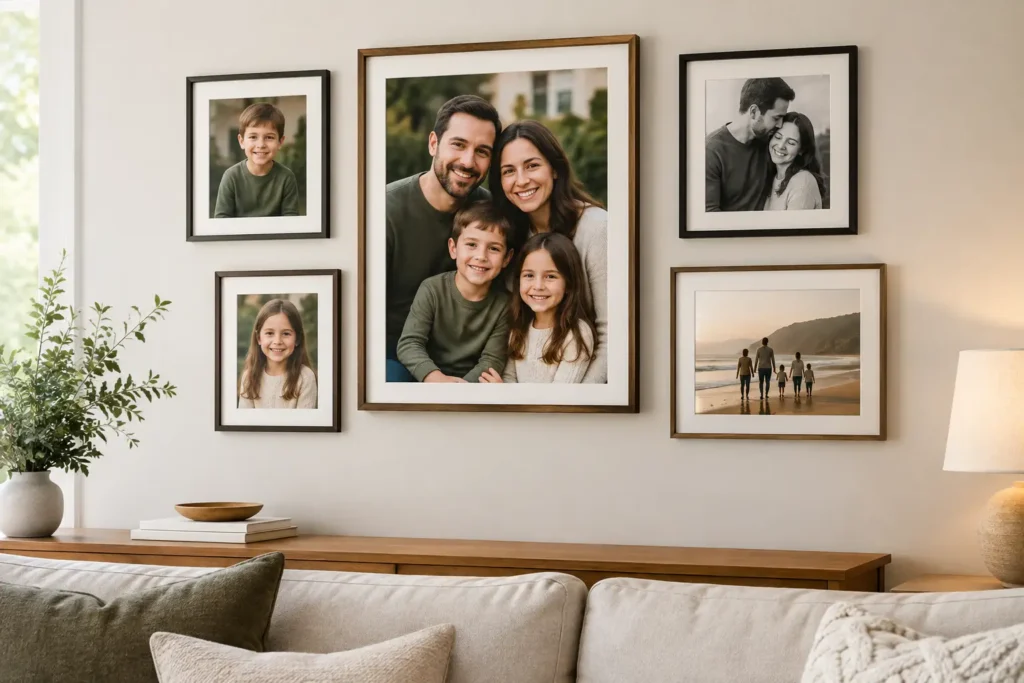
These are often the images parents value most years from now. You can see how tall the children had grown, the shape of a baby’s cheeks, the family resemblance between generations, and the people who belonged to this moment. A classic portrait is especially meaningful for holiday cards, gifts, albums, framed artwork, and milestone announcements.
Posing also solves practical challenges. Young children may be distracted, a family may include several generations, or the light may be at its best for only a short window. Clear guidance helps everyone look comfortable and connected without having to guess what to do with their hands, where to stand, or how to arrange themselves.
Posed does not mean unnatural
The concern many parents have is understandable: they do not want their gallery to feel forced. The answer is not to abandon posing. It is to use it as a starting point rather than a final destination.
A gentle prompt can create a natural result. Instead of asking everyone to freeze into a smile, a photographer may bring family members close, adjust the angle of a shoulder, then invite you to look at your child or share a quick joke. The framework remains intentional, but the expression belongs to you.
For parents, this kind of guidance can be a relief. You do not need to manage the children, direct your spouse, and somehow look relaxed at the same time. You get to be present with your family while someone else pays attention to the details.
Why Candid Family Photos Feel So Personal
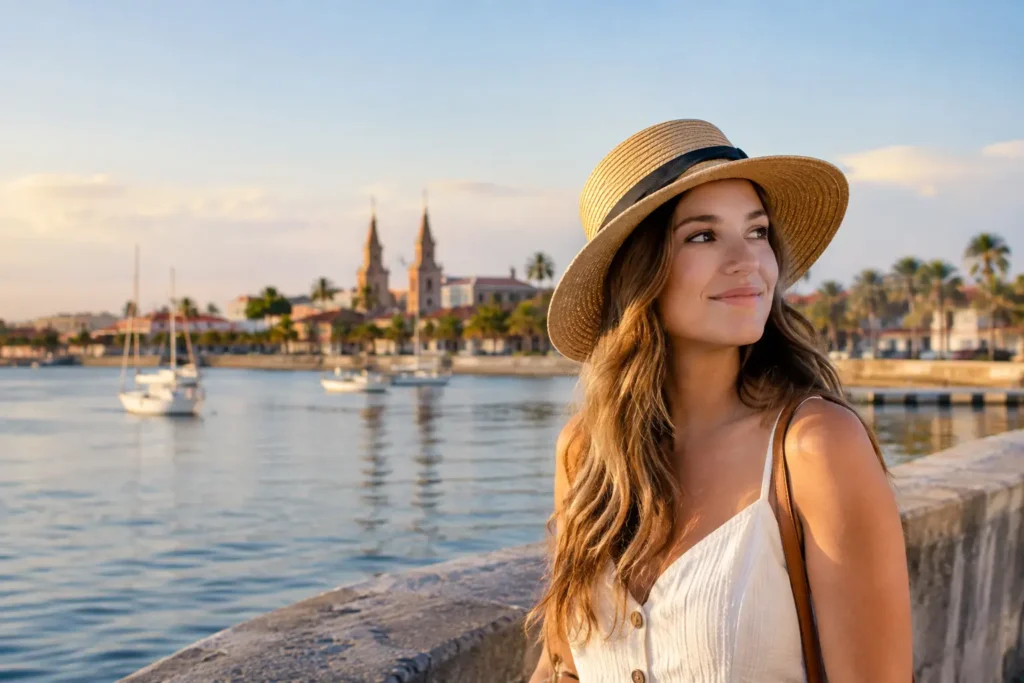
Candid family photos are built around movement and connection. They capture the moments between the formal portraits: the way your daughter tucks her face into your shoulder, the look exchanged when your son says something funny, or the wind catching a dress as your family walks along a St. Augustine beach.
These images often hold the emotional texture of a season. Children are rarely still for long, and that is part of their story. The joyful blur of running feet, a baby reaching for a parent, or siblings laughing after a whispered secret can feel more honest than a perfectly coordinated smile.
Candid photographs are particularly valuable when your hope is to remember how family life felt, not only how everyone looked. Years later, you may notice details you had forgotten: your child’s favorite way to be held, the gap-toothed grin, the closeness between siblings, or the tenderness in your partner’s expression when no one is looking at the camera.
A candid photo still needs intention
Candid does not mean unplanned or accidental. Beautiful candid images depend on thoughtful light, a setting with room to move, and a photographer who knows when to step back and when to offer a prompt.
A child may not spontaneously run toward the prettiest patch of evening light. But a simple invitation to race to a parent, explore the shoreline, or squeeze in for a group hug can create a moment that feels entirely real. The photographer has shaped the conditions while leaving room for your family’s natural response.
That balance matters. Without any direction, families can look disconnected or get lost in a busy location. With too much direction, a session can feel like a series of instructions. The goal is a relaxed rhythm that lets genuine moments happen within a well-considered plan.
Candid Versus Posed Family Photos: Which Is Right for You?
The most honest answer is that it depends on what you want your photographs to do for you. If you are creating a large framed portrait for your living room or gathering extended family for a rare reunion, posed images deserve dedicated time. They ensure every important face is included and visible.
If your main hope is to remember your preschooler’s big personality or document the playful chaos of this stage, candid moments may carry more weight. They allow the session to feel less like a performance and more like an experience you shared together.
For most families, a mix is the strongest choice. Begin with the essential group portraits while everyone is fresh. Then loosen the structure with movement, games, snuggles, and interaction. This approach gives you the classic image your future self will be grateful to have, along with the unguarded images that make your heart ache in the best way.
There are exceptions. If you have a child who becomes overwhelmed by attention, fewer formal setups and more play may be the better path. If grandparents are attending, prioritize the groupings that matter before little ones grow tired. If a newborn is part of the session, expect a slower pace and let feeding, soothing, and resting guide the flow. A family session should serve your real life, not ask you to pretend it is something else.
How to Prepare for a Gallery with Both Styles
You do not need to rehearse smiles or teach your children to behave perfectly. In fact, trying too hard can make everyone more tense. A little preparation helps, but the goal is comfort.
Choose clothing that coordinates without matching exactly, and make sure everyone can move easily. A child who can twirl, sit, be carried, and run is more likely to stay happy than one tugging at an unfamiliar outfit. Build in extra time before your session so no one arrives rushed.
It also helps to set expectations in a positive, simple way. Tell children they will get to play, cuddle, and explore. Avoid promising a reward only if they smile or sit still. Their job is not to perform. Their job is to be themselves, and your job is to stay close and let the connection lead.
During the session, trust the process. There may be a moment when a child needs a break, refuses to look at the camera, or becomes fascinated by a shell on the ground. Those moments are not proof that the session is going wrong. Often, they are the doorway to photographs that feel most like your family.
Let the Session Tell the Truth Beautifully
The question is not whether candid or posed family photos are better. It is whether your photographs reflect the people you love with care. A gallery that includes both gives your family a place to return to: the faces, the bonds, the laughter, and the ordinary gestures that were never ordinary at all.
Bring the people you love, release the pressure to make every moment perfect, and let this chapter be seen for what it is – beautifully real.