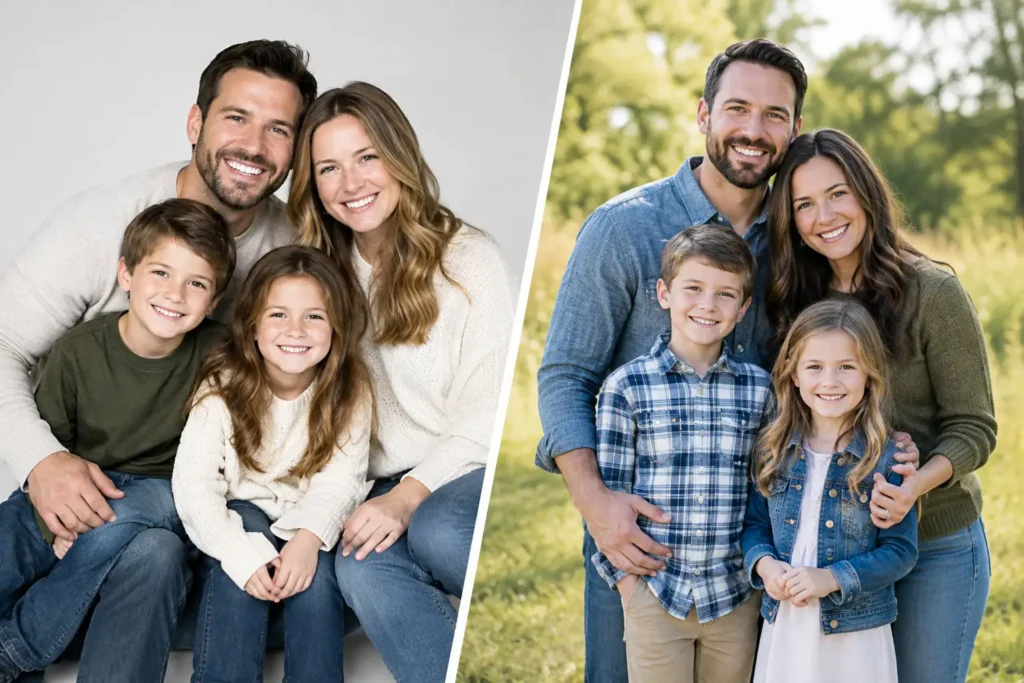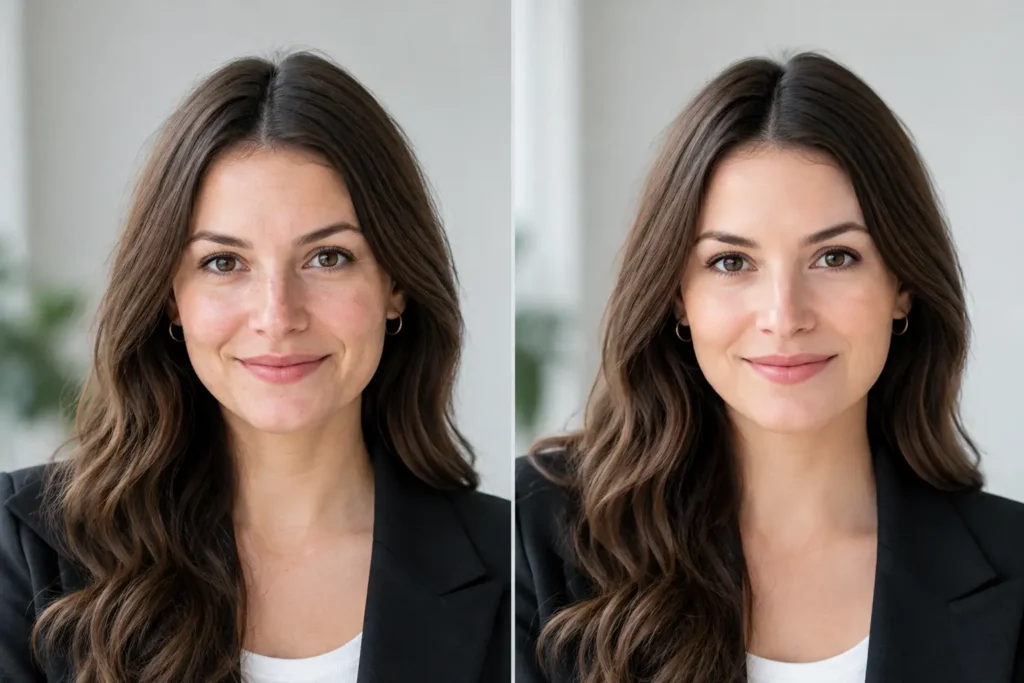
A headshot may be one small square on a website, LinkedIn profile, speaker bio, or business card, but it often introduces you before you get the chance to do it yourself. So, do headshots need retouching? Usually, yes – but the best retouching is so thoughtful that no one notices it. They simply see you: approachable, capable, and comfortable in your own skin.
For professionals, entrepreneurs, and creative business owners in St. Augustine and St. Johns County, a headshot should feel polished without feeling overly produced. The goal is not to create a different person. It is to remove the temporary distractions that can pull attention away from your expression, your presence, and the work you are proud to share.
Do Headshots Need Retouching? Yes, With a Light Hand
Every professional headshot benefits from a level of finishing. Cameras capture an extraordinary amount of detail, including things the eye tends to overlook in a real conversation: a stray hair, a small blemish that appeared that morning, dry lips, lint on a jacket, or redness caused by Florida heat.
Thoughtful retouching helps the final image reflect how you look on a good day, not how a high-resolution camera happened to record one fleeting moment. It is part of creating a finished portrait, much like choosing flattering light, guiding your pose, or helping you select clothing that works well on camera.
Natural retouching might soften temporary blemishes, reduce under-eye shadows, tame flyaway hairs, brighten teeth slightly, and even out minor skin redness. It can also address distractions in clothing or the backdrop. These adjustments support the portrait without becoming the story.
The standard is simple: when someone meets you after seeing your headshot, they should recognize you immediately. Ideally, they should think, “That is exactly you,” rather than wonder when the photo was taken.
What Natural Headshot Retouching Should Preserve
A strong headshot is not about chasing perfection. It is about preserving character. The lines around your eyes may be part of your warm smile. A beauty mark, freckles, textured skin, or a distinctive feature can be part of what makes your portrait feel like home in your own face.
At Willow & Roots Studios, the most meaningful portraits begin with the belief that the client is already the hero of the story. Retouching should honor that. It should not erase the qualities that make your face familiar to your family, clients, colleagues, and community.
Temporary Details Are Different From Permanent Features
A useful way to think about retouching is to separate what is temporary from what is true to you. A breakout, razor burn, a bruise, or a stray hair is temporary. Most people are happy to have those details refined in a professional image.
Permanent characteristics deserve more conversation. Maybe you have a scar you are proud of, or perhaps it carries a memory you would rather not feature in every professional introduction. There is no universal right answer. Your portrait experience should leave room for your preference.
Before your session, or while reviewing your gallery, share what matters to you. A photographer can make better choices when they understand whether you want your freckles retained, your smile lines softened, or a particular feature left exactly as it is.
Texture Is Not a Flaw
Over-smoothed skin is one of the quickest ways for a headshot to feel artificial. Human skin has texture. It reflects light differently across the forehead, cheeks, and chin. It changes with age, sleep, stress, and the season.
Good retouching balances skin tone while retaining enough texture for the image to feel believable. You should not look airbrushed or filtered. You should look rested, polished, and like yourself on a particularly good morning.
When More Retouching Makes Sense
A little additional refinement can be appropriate depending on where and how your headshot will be used. A corporate leadership portrait, a large-format print for a conference, or a close-cropped image for a magazine may call for closer attention than a small website thumbnail.
Branding imagery can also involve more detailed editing because the photos may become part of a long-term visual library. If you are a realtor, attorney, medical professional, coach, or local business owner, those images may appear across marketing materials for months or years. You may want a consistent, elevated finish that still feels personal and credible.
There are trade-offs, though. The more heavily an image is edited, the greater the risk that it will date quickly or lose the trust-building quality a headshot needs. For most professional portraits, timeless is more valuable than trendy.
Retouching Cannot Replace Good Preparation
Editing is the final polish, not a rescue plan. The most natural results begin before the shutter clicks, with intentional choices about wardrobe, lighting, hair, makeup, and posing.
Wear clothing that fits well and makes you feel like yourself, rather than an outfit you think you are supposed to wear for a headshot. Solid colors and simple layers often photograph beautifully, while busy patterns can compete with your face. If you wear glasses every day, wear them in your portrait. If your work is client-facing and your personal style is relaxed, you do not need to become overly formal just for the camera.
Professional hair and makeup can be helpful, especially for sessions scheduled around a busy workday. The goal is not a dramatic transformation. It is camera-ready confidence: controlled shine, defined features, and a look that lasts through the session.
Most importantly, choose a photographer who knows how to guide you. A genuine expression, relaxed shoulders, and flattering light will always have a greater impact than extensive post-production. When you feel supported during the session, there is less pressure to “fix” the image later.
How to Talk About Your Retouching Preferences
You do not need to know technical editing terms to communicate what you want. Honest, clear language works best. You might say that you would like a natural finish, that you are comfortable with skin texture, or that a temporary breakout is bothering you. You can also mention areas you feel sensitive about without apologizing for them.
If you are unsure, ask to see examples of the photographer’s finished headshots. Look closely at skin, teeth, eyes, hair, and clothing. Do the people look polished but recognizable? Does the editing help each person look present and confident, or does everyone begin to look the same?
That visual consistency tells you more than a promise of “retouching included.” It reveals the photographer’s philosophy about authenticity and care.
The Best Headshot Should Still Feel Like You
Your headshot is not meant to prove that you never have a blemish, a tired day, or a line on your face. It is meant to make it easier for the right people to connect with you. For a potential client, that connection begins with trust. For an employer or collaborator, it begins with presence. For your own business, it begins with showing up as the person behind the work.
A well-retouched headshot can give you the confidence to use your image more often instead of hiding from it. It can help you update the website bio, say yes to the speaking opportunity, refresh your social profiles, or finally put your face alongside the business you have built.
Choose retouching that feels like care, not camouflage. The right portrait does not ask you to become someone else for the camera. It gives your real presence the room to be seen.