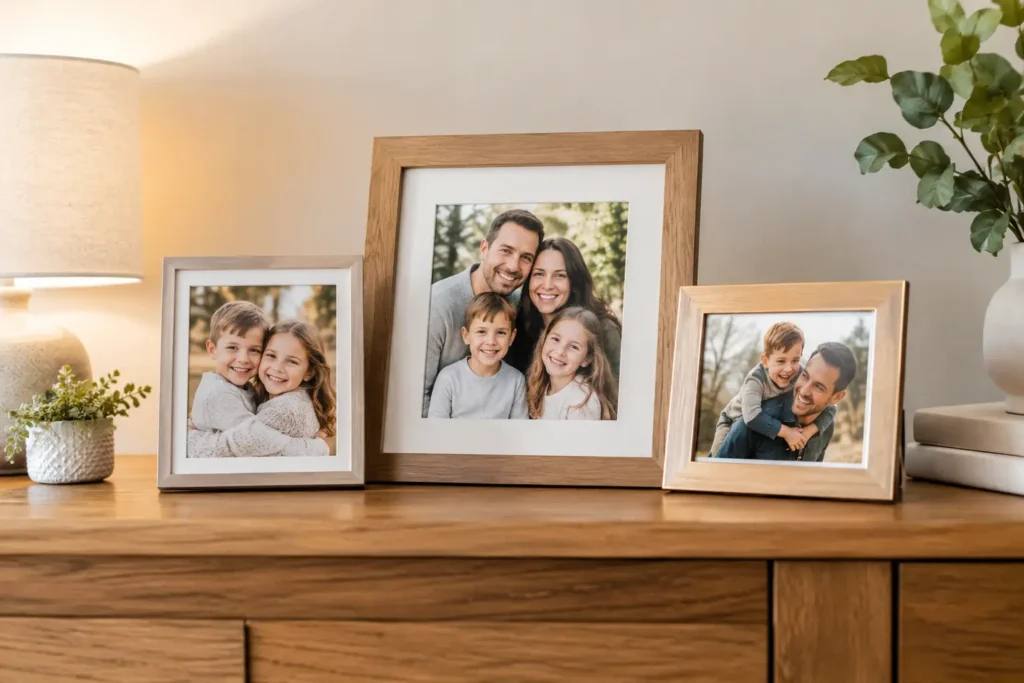
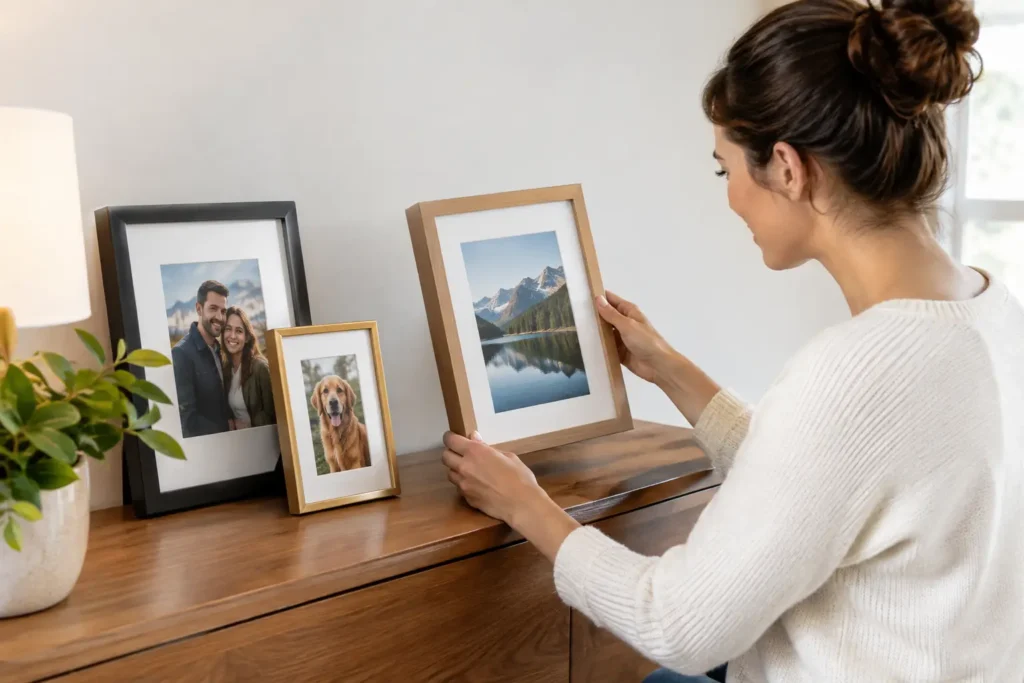
A portrait deserves more than a spot in your camera roll. When you are deciding how to choose portrait frames, you are really deciding how a chapter of your family story will live in your home: the newborn curl of your baby’s hand, your senior’s confident smile, or the everyone-is-finally-looking-at-the-camera family portrait. The right frame gives that memory a place of honor without competing for attention.
Framing can feel surprisingly personal, especially when you want your artwork to remain meaningful as your home and family change. A beautiful choice is rarely about following one trend. It is about choosing scale, color, materials, and placement that let the people in the portrait remain the heart of the piece.
Start With the Feeling You Want the Portrait to Hold
Before considering wood tones or mat colors, think about what you want to feel when you pass this portrait every day. A soft, light-filled newborn image may feel most at home in a warm natural wood frame or a clean white frame. A formal extended-family portrait might call for a richer finish that gives the artwork a grounded, heirloom presence. A senior portrait with bold styling can carry a more modern black or metallic edge.
Your portrait does not need to match every object in the room. It should belong there, but it can also be the piece that draws you in. The goal is harmony, not camouflage.
Think, too, about the story behind the image. An annual family portrait displayed in a hallway can become a visual record of the years. A maternity portrait in the nursery may hold anticipation long after that room changes. A polished branding portrait in your office should feel confident and aligned with the work you are building. Let the purpose of the image guide the frame’s personality.
How to Choose Portrait Frames by Size and Scale
The most common framing mistake is choosing artwork that is too small for the wall. A lovely 8-by-10 portrait can get lost over a sofa, bed, fireplace mantel, or wide console table. In those spaces, size creates impact and gives the image room to be seen from across the room.
A helpful starting point is to let framed artwork span about two-thirds to three-fourths the width of the furniture below it. Over a 72-inch sofa, for example, a single framed piece or grouped arrangement should generally cover roughly 48 to 54 inches across. This is a guideline, not a rule, but it prevents the floating-postage-stamp look that makes even beautiful portraits feel accidental.
For a single portrait, a larger print with a modest frame often feels more intentional than a small image surrounded by an overly wide frame. If you love the breathing room that a mat provides, account for it in the overall dimensions. A 16-by-20 print can become a substantial 24-by-30 finished piece once it is matted and framed.
Let viewing distance inform print size
Consider where people will stand when they see the artwork. Portraits near an entryway, in a hallway, or beside a staircase are viewed up close, so smaller pieces can feel intimate and inviting. Artwork above a mantel or in a large living room needs enough visual presence to read from farther away.
If you are creating a gallery wall, vary image orientation while keeping the overall arrangement connected. A mix of vertical family portraits, horizontal beach images, and small milestone details can tell a fuller story than a row of identical prints. Consistent frame finishes or mat colors will help the collection feel thoughtfully composed.
Choose a Frame That Supports the Image
Frames should quietly support the photograph rather than steal its voice. Look first at the image’s color palette, lighting, wardrobe, and overall mood.
Light wood frames pair beautifully with coastal homes, relaxed family images, and portraits filled with warm Florida light. They can bring softness to neutral spaces without feeling overly formal. Dark walnut, espresso, and black frames add contrast and structure, making them a strong choice for dramatic black-and-white portraits, formal imagery, and rooms with deeper accents.
White frames often work well with airy interiors and delicate newborn portraits, but they are not automatically the best choice for every light image. On a white wall, a white frame may need a mat or a slightly textured finish to keep the artwork from disappearing. Metallic frames can bring a refined touch to a formal space, though a highly shiny finish may date faster than a muted gold, champagne, or brushed metal.
Black-and-white portraits offer flexibility, but they still need thoughtful framing. A black frame creates a crisp, timeless statement. Natural wood warms the image and makes it feel more relaxed. A soft gold or antique brass frame can add a sense of occasion, especially for a portrait intended to become part of a family legacy.
Do Not Overlook Mats and Glass
A mat is not just empty space around a photograph. It creates visual breathing room, separates the print from the glass, and can make an image feel more substantial. White, ivory, soft gray, and warm linen mats are enduring choices because they keep attention on the portrait. A stark bright-white mat can look clean and contemporary, while an ivory mat may feel gentler alongside warm skin tones and natural wood finishes.
Colored mats are best used with restraint. A subtle tone pulled from the image can be lovely, but a bold mat can quickly become the first thing you notice. When the portrait is the heirloom, simpler is usually stronger.
The glass matters, too, especially in sunny St. Augustine homes. Standard glass is fine for some spaces, but glare can make a portrait difficult to enjoy near windows or under overhead lighting. Non-glare and UV-protective glazing are worth considering for artwork displayed in bright rooms. UV protection helps reduce fading over time, which is especially valuable for photographs you hope to pass down.
For pieces displayed in humid areas, avoid placing framed portraits directly in bathrooms or where they may be exposed to moisture. A professionally constructed frame with quality backing is a better long-term choice than a lightweight frame that warps or allows dust to reach the print.
Match the Frame to Your Home Without Chasing Trends
You do not need every frame in your home to match exactly. In fact, a home filled with identical frames can feel more like a showroom than a lived-in collection of memories. Instead, choose a small family of finishes that relates to your space. You might use natural oak, black, and soft white throughout the house, then repeat those tones in different rooms.
If your home is traditional, carved or detailed frames can work beautifully, particularly for formal portraits. In a modern home, clean-lined frames with simple profiles allow the photography to carry the emotion. In a coastal or transitional space, pale woods, linen mats, and soft neutrals often feel easy and timeless.
Trends can offer inspiration, but they should not make the final decision. A portrait from your child’s first year should still feel like home when their senior portraits join it years later. Choose finishes you will be glad to live with through changing paint colors, furniture, and seasons of life.
Plan the Placement Before You Order
Before selecting a final size, use painter’s tape or kraft paper to outline the framed dimensions on the wall. Live with it for a day or two. Notice whether it feels balanced from the doorway, whether it sits comfortably above the furniture, and whether the room’s lighting creates reflections.
Hang artwork so its center is generally around 57 to 60 inches from the floor, adjusting as needed for ceilings, furniture, and the people who live in your home. Over furniture, leave a comfortable visual connection rather than placing the frame too high. About 6 to 10 inches above a sofa, console, or headboard is often a good range.
For stairways and gallery walls, map the entire composition before making holes. Keep spacing consistent, usually around 2 to 3 inches between frames, and let the arrangement follow the movement of the space. The result should feel like a story unfolding, not a collection added one piece at a time.
A portrait session captures a moment, but displaying that image is how it becomes part of your daily life. Choose the frame that makes you pause, smile, and remember exactly what that chapter felt like. Years from now, that quiet pause may become one of the most meaningful parts of the artwork.