A shy child does not need to become the center of attention to create a beautiful portrait. Often, the most meaningful images happen in the quiet in-between moments: a little hand tucked into Mom’s, a cautious smile aimed at Dad, or a child peeking out from behind a sibling. Knowing how to pose shy kids begins with letting go of the idea that they need to perform. They simply need to feel safe enough to be themselves.
At a family session, your child is never expected to arrive camera-ready with a big smile on command. Their personality, their pace, and even their hesitation are part of this chapter of your family’s story. With gentle guidance and a little room to warm up, shy children can feel comfortable in front of the camera and create portraits that feel honest, connected, and timeless.
Start With Connection, Not a Camera
The first few minutes of a session can shape everything that follows. A shy child may need time to watch, listen, and decide that this new person with a camera is safe. Rather than approaching quickly or asking for a smile right away, a thoughtful photographer gives them space.
Parents can help by staying close and keeping the mood easy. Talk about something familiar on the way to the session, bring a favorite comfort item if it makes sense, and avoid framing portraits as a test your child has to pass. A simple, low-pressure message works best: “We are going to spend some time together and have fun.”
It also helps if parents resist apologizing for shyness. Your child is not doing anything wrong. When adults become worried or repeatedly ask them to smile, a child can feel even more watched. Calm confidence gives them permission to settle in.
How to Pose Shy Kids Without Making Them Feel Posed
The best poses for reserved children usually do not look like poses at all. Instead of asking them to stand alone, look directly at the camera, and hold still, build each setup around a relationship or a small activity. Connection gives a child somewhere to place their attention besides the lens.
A young child might begin sitting between their parents, leaning into Mom’s shoulder, or holding Dad’s hand while everyone takes a slow walk. An older shy child may feel more natural standing beside a parent, looking down at a younger sibling, or sharing a quiet laugh with the family rather than being singled out.
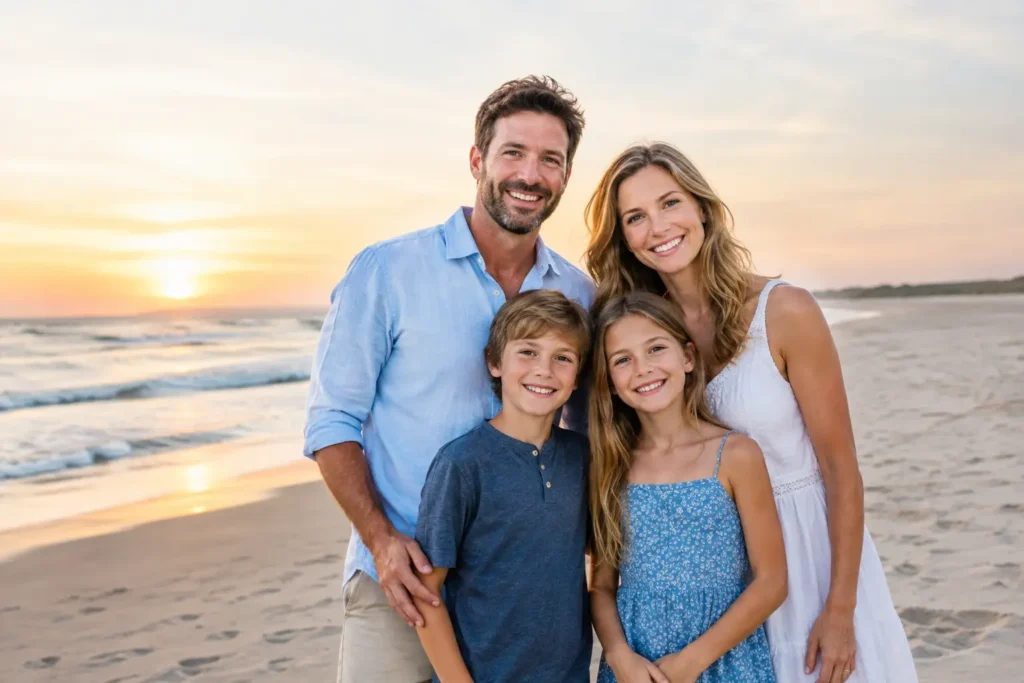
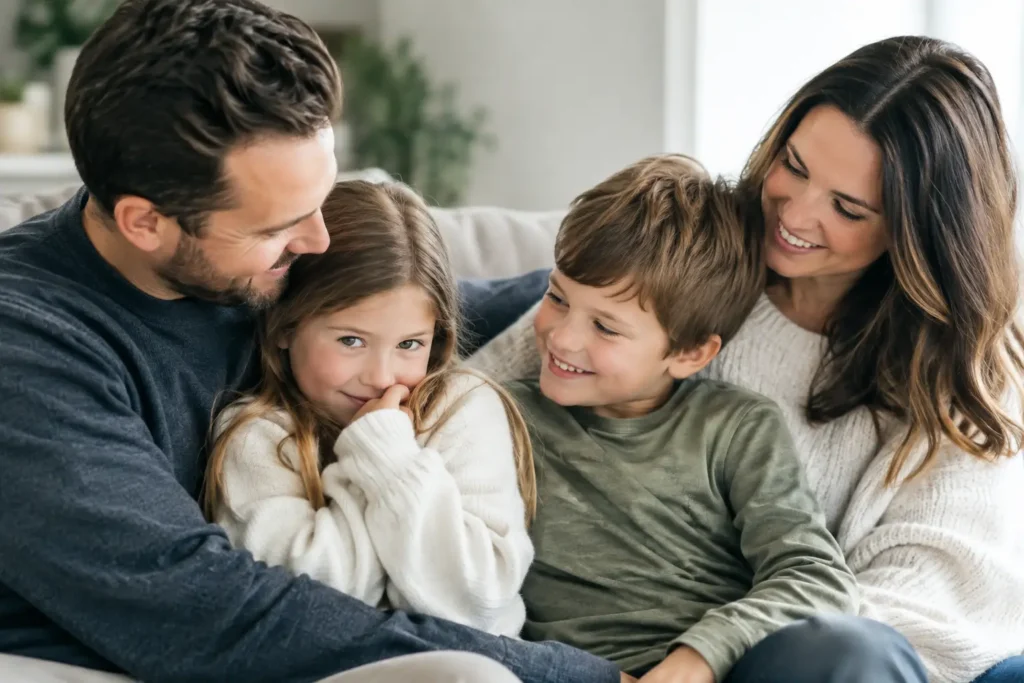
Physical closeness is especially helpful. Holding hands, sitting on a parent’s lap, wrapping arms around each other, or forming a gentle family cuddle can make a child feel protected while creating a naturally flattering composition. These moments also photograph beautifully because they show the comfort and belonging at the heart of family life.
Try giving a child a role instead of an instruction. Ask them to show a sibling their favorite leaf, whisper a silly secret to Mom, or help Dad count to three before a big hug. These prompts create movement and genuine expression without demanding eye contact or a practiced grin.
Let the Child Choose Their Distance
Some children warm up within five minutes. Others need much longer, and that is completely normal. A flexible session does not force every child into the same timeline.
At first, a shy child may be happiest on a parent’s hip or just outside the main frame, watching what is happening. That still gives the photographer valuable opportunities to capture family connection. A child peeking around a parent’s leg, nestled against a shoulder, or studying a flower nearby can create an image that feels far more personal than a stiff, reluctant smile.
As comfort grows, the distance can gradually change. They may walk beside the family, then hold a sibling’s hand, then agree to a quick portrait with Mom. By the time the camera is pointed their way more directly, it is no longer an unfamiliar demand. It is simply part of the play and togetherness already happening.
There is a trade-off here: moving slowly can mean fewer formal, everyone-looking-at-the-camera frames at the beginning of a session. But it often leads to a fuller gallery of real expression, and there is usually time to return to a classic family portrait once the child has relaxed.
Use Playful Prompts Instead of “Say Cheese”
“Say cheese” asks a child to produce an expression on cue. For many shy kids, that can feel awkward. Playful prompts offer something much easier: a reason to react.
For little ones, gentle games work well. A photographer might ask who can give the quietest hug, invite a child to race into a parent’s arms, or have everyone look for the tiniest thing they can find nearby. The goal is not to make a child perform. It is to invite small, manageable moments of play.
Older children and teens may prefer a more respectful approach. They may respond to a quick conversation about a favorite sport, music, hobby, or school activity. They might relax when asked to walk with a parent, adjust a jacket, or look toward the water rather than directly into the camera. Not every portrait needs a broad smile to feel warm. A peaceful expression and relaxed posture can be just as beautiful.
The most successful prompts are specific, brief, and easy to ignore if the child is not ready. A skilled photographer watches for what brings a little spark to their face and follows that lead rather than repeating the same request.
Give Their Hands and Eyes Somewhere to Go
Children often feel self-conscious when they do not know what to do with their bodies. This is true for adults, too. Giving shy kids a simple point of focus can ease that uncertainty.
A small, meaningful prop can help when used thoughtfully. A treasured stuffed animal, a favorite book, a flower, or a family blanket can provide comfort and give little hands something to hold. It should support the story, not take it over. If the child clings to their lovey throughout the session, that may be exactly the detail you will cherish years from now.
For eyes, encourage them to look at a parent, a sibling, the sky, or something in the distance. Direct eye contact with the camera is lovely when it happens naturally, but it is never the only measure of a successful image. Looking at the people they love often creates the more emotional photograph anyway.
Parents Set the Emotional Temperature
Children are remarkably tuned in to their parents. If you are tense about getting the perfect holiday-card photo, your child may sense it. If you can laugh when plans shift, they are more likely to do the same.
During the session, stay physically and emotionally available. Keep touching, talking, and reassuring your child. If they want to be held, hold them. If they need a snack or a short break, take one. Trying to push through a child’s overwhelm rarely creates the relaxed portraits families hope for.
This does not mean every image needs to be spontaneous or unstructured. Gentle direction is still useful. At Willow & Roots Studios, we guide families into flattering, connected arrangements, then leave room for the real moments to unfold within them. That balance helps parents feel cared for and children feel less managed.
Plan for Comfort Before Session Day
A little preparation can make a meaningful difference. Choose clothing that feels comfortable and familiar, especially for children who are sensitive to textures or new outfits. Avoid scheduling portraits during the part of the day when your child is usually hungry, overtired, or adjusting to a missed nap when possible.
Let them know what to expect in simple language. You might say that a friendly photographer will take some pictures while the family walks, cuddles, and plays together. Avoid promising rewards for smiling or warning them that they need to behave. Those messages can add pressure when what they need most is ease.
If your session is outdoors in St. Augustine or elsewhere in St. Johns County, consider the weather, heat, and location. A breezy beach may feel wonderful to one child and overwhelming to another. A familiar park, quiet garden, or cozy in-home setting may be the better fit depending on your family and your child’s temperament.
Make Room for the Honest Moments
Some of the portraits you treasure most may not be the ones you expected. It might be the serious face your toddler makes while holding Dad’s finger, the way your daughter hides a grin in Mom’s dress, or the image of your quiet child finally laughing with a sibling.
Those moments are not less than the perfectly coordinated, everyone-smiling frame. They are part of your family’s real story right now. When a child is allowed to arrive exactly as they are, the camera can preserve not only what they looked like at this age, but how it felt to be loved through every stage of becoming themselves.
Bring patience, stay close, and let your child set a little of the pace. The confidence will come, sometimes slowly and sometimes all at once, and the portraits will hold far more than a smile.