
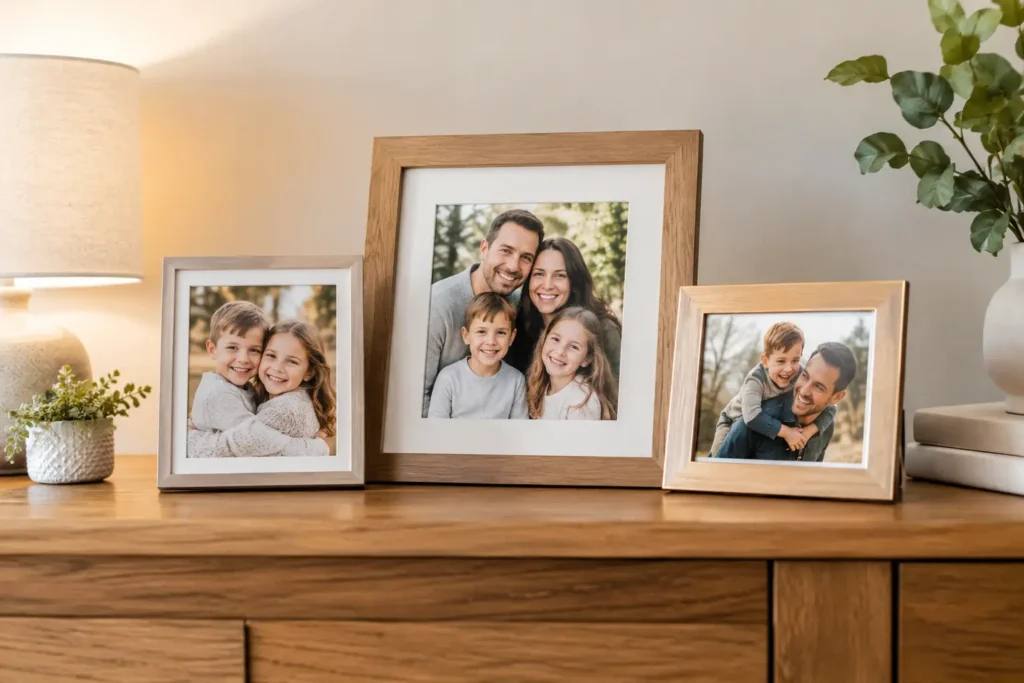
A finished family portrait deserves more than a folder on your phone or a quick post that disappears beneath tomorrow’s updates. Learning how to display family portraits is really about making room for your story in the life you already live – the hallway your children race through, the entryway that welcomes grandparents, the bedroom where you begin and end each day.
The most meaningful displays do not need to look like a showroom. They should feel like your family: connected, collected over time, and full of the people and seasons that matter most. With a little intention around placement, scale, and materials, your portraits can become a daily reminder that this chapter is worth remembering.
Begin With the Story You Want Your Home to Tell
Before choosing a frame or measuring a wall, consider the feeling you want when someone enters the room. A single large family portrait can make a beautiful statement about togetherness. A gallery of images from newborn days, birthdays, and annual family sessions can tell the longer story of a family growing up.
There is no rule that says every image must match perfectly. In fact, homes often feel warmer when the artwork reflects real life over time. Your maternity portrait might live beside a newborn image. A favorite beach session may sit near a senior portrait years later. These are not competing photographs. They are chapters of the same story.
Choose the images that make you pause. Look for genuine connection, familiar expressions, and moments that bring you back to how that season felt. Technical perfection matters, but the portrait that makes your heart squeeze a little is usually the one that belongs on the wall.
How to Display Family Portraits in the Right Places
The best place for family artwork is often where your family spends the most time. Portraits should not be saved only for formal spaces that stay closed off from everyday life.
An entryway is a natural home for a signature family portrait. It sets a welcoming tone and immediately tells visitors what matters to you. In a living room or family room, a larger piece above a sofa, fireplace, or console can anchor the entire space. Choose an image with enough visual breathing room that it still feels calm when viewed from across the room.
Hallways work beautifully for a collection of portraits, especially if you return for photos at meaningful milestones. A hallway gallery gives everyone a chance to notice the changes that are easy to miss while living them: a toddler’s round cheeks, a child’s gap-toothed grin, a teenager suddenly taller than you.
Bedrooms offer a more private and tender option. Consider placing a favorite family image in the primary bedroom or a portrait of siblings in a child’s room. These spaces are especially fitting for photographs that feel quiet, affectionate, and personal.
Kitchens can work, too, though they require a bit more care. Keep artwork away from direct heat, heavy steam, and greasy cooking areas. A framed portrait near a breakfast nook or on an open shelf can make ordinary mornings feel more connected.
Let Scale Do Some of the Work
One of the most common display mistakes is choosing artwork that is too small for the wall. A beautiful 8-by-10 portrait can get lost above a long sofa or on a wide entryway wall. If you have ever hung a print and felt it looked a little lonely, size was probably the issue.
For a statement wall, consider one larger piece rather than several small ones. A 24-by-36 or 30-by-40 portrait often has the presence needed over furniture, depending on the room’s proportions. As a general guide, artwork above a sofa, bed, or console should span roughly two-thirds to three-fourths of the furniture’s width. It does not need to be exact, but it should feel visually connected rather than floating alone.
If a large portrait feels like too much commitment, create a grouped display. Three coordinated pieces can offer the same sense of presence while letting you include a few different moments. For example, a central family portrait paired with two close-up images of your children can feel balanced and deeply personal.
When hanging artwork, aim for the center of the display to sit around 57 to 60 inches from the floor. This is a helpful starting point, not a hard rule. If the room has high ceilings, tall furniture, or family members who are especially tall, adjust as needed. The goal is for the portraits to meet your eye naturally.
Choose Frames and Finishes That Belong in Your Home
Frames should support the portrait, not distract from it. A simple wood frame adds warmth to relaxed, coastal, traditional, or organic spaces. Black frames create clean definition and work well in both modern and classic homes. Light oak, soft white, or natural finishes can feel especially at home in bright Florida interiors.
Consistency helps a gallery wall feel intentional, but matching every frame is not the only option. You might use the same frame color in different sizes, or blend wood tones that share a similar warmth. What matters most is that the collection has a visual thread.
Matting can give portraits a little more room to breathe, especially smaller prints. A generous white or soft neutral mat can turn a modest image into something that feels substantial on the wall. For more contemporary spaces, full-bleed prints without mats may feel right.
Canvas and framed fine art prints each create a different mood. Canvas has softness and texture, making it lovely for larger statement pieces. Framed prints tend to feel more polished and flexible, particularly when building a gallery. The right choice depends on your home, the portrait itself, and whether you want the artwork to blend in gently or take center stage.
Build a Gallery Wall Without Making It Feel Busy
A gallery wall can be one of the most rewarding ways to display your family’s story, but it benefits from a plan. Start by gathering the portraits you truly want to include. A mix of wide family images, close-ups, and candid-feeling moments creates depth. Too many nearly identical poses can make the display feel repetitive.
Lay the arrangement on the floor first, or trace each frame onto kraft paper and tape the outlines to the wall. This simple step lets you see the spacing before making holes. Keep frames about two to three inches apart for a collected but connected look.
Give your arrangement an anchor. That may be the largest portrait in the center, a horizontal image that grounds the lower edge, or a meaningful older photograph that starts the story. From there, build outward. Gallery walls do not need perfect symmetry, but they do need visual balance. If one side holds a large dark frame, the other side may need a similarly substantial piece to keep the arrangement from feeling lopsided.
Do not feel pressured to fill every available inch. Negative space is part of what lets each portrait matter. You can always add another chapter later.
Protect the Portraits You Want to Pass Down
Family photographs are heirlooms in the making, so choose display methods that help them last. Keep prints out of direct sunlight whenever possible, particularly in bright rooms with strong afternoon light. UV-protective glass or acrylic is a thoughtful choice for portraits displayed near windows.
Humidity is another consideration in Florida homes. Avoid hanging valuable prints in bathrooms, laundry rooms, or any area prone to moisture. If you love the idea of family images in those spaces, use duplicate prints rather than one-of-a-kind artwork.
It is also wise to rotate smaller framed portraits seasonally or as new milestones arrive. This is not a sign that one image matters less. It is a way to keep your walls alive with the family you are becoming. Store retired prints flat in an archival box, away from heat and dampness, so they remain ready for their next place in your home.
Make Room for the Chapter You Are Living Now
It can be tempting to wait until everyone is older, the house is finished, or the wall color is exactly right. But the season you are living right now is not a placeholder. The small hands, the growing personalities, the beautiful mess of a full family life – it all deserves to be seen.
At Willow & Roots Studios, we believe portraits are meant to live with you, not disappear into digital storage. Choose one image that feels like home, give it a place where you will see it often, and let it remind you that the people in the frame are your greatest story.